


Discription
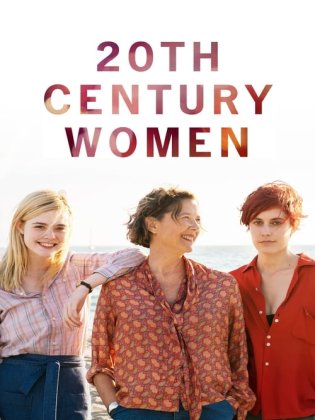
20TH CENTURY WOMEN (2016)
Summary:
Set in Santa Barbara, California, in 1979, "20th Century Women" is a vibrant and intimate comedy-drama centered on Dorothea Fields, a determined and single mother in her mid-50s, raising her adolescent son, Jamie. Feeling increasingly disconnected from her son as he navigates the cusp of manhood, Dorothea enlists the help of two younger women in her life: Abbie, a free-spirited punk photographer and tenant in her sprawling, bohemian house, and Julie, Jamie's emotionally complex best friend who frequently sleeps over. Through their diverse perspectives, Dorothea hopes to impart wisdom and understanding to Jamie about life, love, and what it means to be a man in a rapidly changing world.
The film beautifully explores themes of unconventional family, generational divides, feminism, and the search for identity against the backdrop of a pivotal cultural moment. It's a character study told through a series of vignettes, voice-overs, and deeply personal interactions, offering a tender and often humorous look at the challenges and joys of raising a child, and the profound impact of the people who shape our lives. The narrative unfolds with a poignant blend of nostalgia and forward-looking introspection, ultimately celebrating the messy, beautiful complexities of human connection.
Keywords: 20th Century Women, 2016, Annette Bening, Lucas Jade Zumann, Greta Gerwig, Elle Fanning, Billy Crudup, Mike Mills, Comedy-Drama, Coming-of-Age, 1970s, Feminism, Motherhood.
Plot:
The film opens in Santa Barbara, California, in 1979, immersing the audience in a world on the cusp of a new decade, still reeling from the cultural shifts of the 1960s and 70s. Dorothea Fields, a fiercely independent and unconventional single mother in her mid-50s, lives in a large, perpetually renovating house with her 15-year-old son, Jamie. The house itself is a character, a sprawling, bohemian space reflecting Dorothea's free spirit and her ongoing, often unfinished, projects. Jamie, narrated by his older self, observes his mother with a mixture of love, confusion, and adolescent angst. He notes her uniqueness, her smoking, her vintage car, and her struggle to connect with him as he grows into a young man.
Dorothea, recognizing the widening gap between herself and her son, feels she can no longer effectively guide him alone. In a pivotal moment, after Jamie faints while skateboarding and then gets into trouble, she decides to enlist the help of two younger women who are integral to their lives. The first is Abbie Porter, a vibrant, artistic tenant in Dorothea's house. Abbie, a punk photographer in her late 20s, is recovering from cervical cancer and brings a raw, modern feminist perspective to the household. The second is Julie Hamlin, Jamie's best friend, a sharp and sexually experienced but emotionally guarded girl his age, who frequently sleeps over in Jamie's bed – platonically, much to Jamie's frustration. Dorothea asks these two women to help "raise" Jamie, to impart their wisdom and experiences, particularly about women, since Dorothea feels she can only offer a mother's view.
The film then unfolds as a series of interconnected vignettes, each exploring the relationships between these five characters: Dorothea, Jamie, Abbie, Julie, and William, a gentle, spiritual handyman who lives in the house and serves as a kind of surrogate father figure. Abbie takes Jamie to punk rock clubs, exposing him to the raw energy and rebellious spirit of the scene, sharing her photography, and discussing the nuances of feminism and female desire. She encourages him to read books like "Our Bodies, Ourselves" and brings him to her art show, where her candid, often stark, photographs of women's bodies challenge Jamie's preconceived notions. Through Abbie, Jamie begins to see women not just as objects of desire, but as complex beings with inner lives, struggles, and agency.
Julie, on the other hand, provides a different, more intimate, but equally challenging education. She and Jamie share a bed almost nightly, a platonic arrangement that frustrates Jamie's burgeoning sexual desires. Julie openly discusses her sexual experiences with other boys, her emotional detachment, and her fears, often leaving Jamie confused and hurt by her casualness and her inability to reciprocate his deeper feelings. Their conversations, however, force Jamie to confront the complexities of female sexuality, consent, and emotional intimacy, pushing him beyond simplistic understandings of relationships. He learns about the pain of unrequited love and the frustrating boundaries of friendship when desire is involved.
Dorothea herself is a fascinating study. She is a woman of the Greatest Generation, a survivor of the Depression, who carries a certain stoicism and a desire for independence, yet struggles with understanding the changing world and her son's place in it. She tries to connect with Jamie by sharing her own stories and observations, but often finds her efforts met with teenage indifference. She's a chain smoker who loves her vintage car, a symbol of her enduring spirit. Her conversations with William, the handyman, often reveal her anxieties about her son and her own aging. William, a kind and somewhat naive figure who often talks about "the universe," provides a steady, if sometimes bewildered, male presence in the house.
Throughout the film, Jamie's perspective is central. He observes the women around him, trying to piece together what it means to be a man and how to navigate relationships with women. He has crushes, experiments with smoking, and struggles with his identity. A particularly poignant scene involves a fire in the house, which, while minor, acts as a catalyst for reflection and concern, highlighting the fragility of their unconventional family unit. Another memorable sequence involves Dorothea attempting to explain menstruation to Jamie, a hilariously awkward but tender moment that underscores her efforts to be open and informative, despite her own discomfort.
The film is punctuated by narrative voice-overs from Jamie, Dorothea, Abbie, and Julie, offering glimpses into their pasts and future, giving the audience a broader context for their present struggles and triumphs. These flash-forwards reveal the ultimate fates and paths of the characters, adding a layer of bittersweet nostalgia and profound meaning to their interactions in 1979. We learn of Dorothea's eventual passing, Abbie's continued artistic journey and her battle with cancer, and Julie's eventual career path and family life. Jamie's older self reflects on how these women, particularly his mother, shaped him into the man he became, emphasizing the lasting impact of their unconventional "village."
The movie culminates in a series of quiet, reflective moments rather than a dramatic climax. The characters continue to live their lives, learning from each other, sometimes clashing, but always bound by a deep, if unspoken, affection. Dorothea's final scenes emphasize her enduring strength and her love for Jamie, even as she acknowledges the inevitability of his growing independence and her own mortality. "20th Century Women" is ultimately a celebration of the messy, beautiful, and often humorous process of growing up and growing old, and the profound, indelible mark that the people we choose as family leave on our souls, particularly in the pivotal, transformative years of adolescence and beyond.
Cast (Lead Roles):
- Annette Bening as Dorothea Fields
- Lucas Jade Zumann as Jamie Fields
- Greta Gerwig as Abbie Porter
- Elle Fanning as Julie Hamlin
- Billy Crudup as William
Crew:
- Director: Mike Mills
- Writer: Mike Mills
- Producers: Anne Carey, Megan Ellison, Mike Mills
- Cinematography: Sean Porter
- Editor: Jennifer Vecchiarello
- Music: Roger Neill
Release Info:
- Original Release Date: October 8, 2016 (New York Film Festival) / December 28, 2016 (Limited)
- Language: English
- Genre: Comedy-Drama
- Running Time: 119 minutes
- Accolades: Academy Award nomination for Best Original Screenplay (Mike Mills)