


Discription
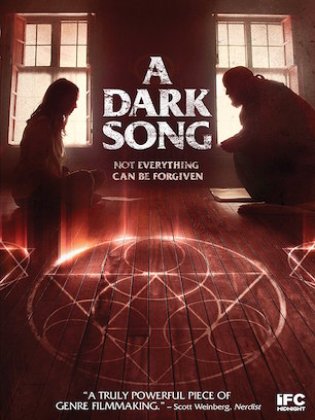
A DARK SONG (2016)
Summary:
A grieving mother, Sophia Howard, consumed by the loss of her young son, makes a desperate pact with an arrogant and reclusive occultist named Josef Solomon. Her singular goal is to contact her deceased child, believing a powerful ancient ritual can grant her this wish. They retreat to a remote, isolated house in the Welsh countryside, where they must undertake the incredibly demanding and dangerous Abramelin ritual, a complex six-month-long process designed to summon a guardian angel.
As the ritual unfolds, the isolated environment and the strict, grueling regimen begin to take a severe psychological toll on both Sophia and Josef. The lines between reality and hallucination blur, and the house itself seems to come alive with increasingly terrifying supernatural phenomena. Both characters are forced to confront their deepest fears, past traumas, and hidden agendas, leading to revelations that threaten to derail the entire process and unleash forces far beyond their control.
Keywords: A Dark Song, 2016, Catherine Walker, Steve O'Connell, Horror, Drama, Occult, Supernatural, Grief, Ritual.
Plot:
The film opens with Sophia Howard, a woman visibly burdened by immense grief, purchasing a remote, secluded house in the Welsh countryside. Her purpose is soon revealed: she is preparing for an elaborate and dangerous occult ritual. She hires Josef Solomon, a stern, cynical, and highly experienced occultist, to guide her through the six-month-long Abramelin ritual. Sophia's stated goal is to make contact with her deceased son, who she believes can only be reached through this ancient and potent magical working. Josef, initially skeptical of her true motives, agrees to undertake the ritual, laying out stringent rules: absolute isolation from the outside world, no contact with anyone, and complete obedience to his instructions, which are based on the meticulous, often mundane, requirements of the Abramelin text.
Their journey begins with the meticulous preparation of the house. Josef draws a massive, intricate pentagram on the floor of the main room, which will serve as their sacred space and protective barrier. Sophia undergoes a rigorous purification process, including dietary restrictions, daily baths, and constant prayer, all designed to cleanse her body and mind. The initial weeks are marked by extreme tedium and friction. Sophia, accustomed to a more active life, struggles with the monotony of the ritual, which involves endless chanting, meditation, and the performance of seemingly trivial tasks. Josef, a harsh and unforgiving taskmaster, pushes her to her limits, refusing to entertain her questions or complaints, insisting that discipline and adherence to the ritual's exact specifications are paramount for their survival and success.
As the ritual progresses, the isolated house begins to manifest strange phenomena. Unexplained noises echo through the empty rooms, objects shift subtly, and fleeting shadows are glimpsed in the periphery. Josef explains these as early "tests" from the spiritual entities they are attempting to contact – or perhaps from more malevolent forces attempting to disrupt them. He warns Sophia that these manifestations will become increasingly personal and terrifying, designed to exploit their weaknesses and break their resolve. Sophia, though frightened, remains steadfast, fueled by her desperate desire to reconnect with her son. Her resilience is constantly challenged by Josef's unyielding demeanor and the growing sense of dread that permeates their secluded environment.
The psychological toll escalates dramatically. Sophia, pushed to the brink of emotional exhaustion, begins to unravel. During a particularly intense period of self-reflection and confession, she reveals the true, darker nature of her grief: her son was murdered, and while she wants to speak to him, her deeper, unspoken desire is for revenge against his killers. This revelation deeply disturbs Josef, who reiterates the ritual's purpose is not for vengeance but for spiritual enlightenment and connection with one's guardian angel. He reveals his own past failures and personal demons, admitting to having attempted the ritual before and failed, leaving him with a profound sense of spiritual emptiness. This shared vulnerability, though fraught with tension, subtly shifts their dynamic, forging a fragile, reluctant bond between them.
The "tests" become more insidious and targeted. Sophia experiences vivid, terrifying hallucinations: her son appears, seemingly alive, tempting her to abandon the ritual and embrace him. Demonic figures manifest, attempting to lure her out of the protective pentagram or drive her to despair. One particularly harrowing incident involves a succubus-like entity, a beautiful woman who tries to seduce Sophia, testing her purity and resolve. Sophia, despite her terror, manages to resist these temptations, often relying on Josef's stern guidance and the power of the ritual's protective elements. Each successful resistance, however, leaves her more emotionally scarred and physically drained, blurring the lines between what is real and what is a product of her own fractured psyche.
The friction between Sophia and Josef reaches a boiling point when a series of particularly disturbing visions leads to a violent confrontation. Sophia accuses Josef of manipulating her, questioning his motives and his past. Josef, in turn, reveals more of his own dark history, admitting to a past of sexual misconduct and abuse, which he views as his own personal "hell" and the reason for his initial failure with the Abramelin ritual. This confession further complicates their already strained relationship, adding a layer of moral ambiguity to Josef's role as spiritual guide. Despite the profound distrust, they are too far into the ritual to turn back, bound by the escalating supernatural forces and their shared, albeit different, desperate hopes.
As the ritual nears its final, most dangerous stages, the house becomes a vortex of supernatural activity. Poltergeist phenomena become violent; objects are thrown, lights flicker erratically, and the air grows heavy with an unseen presence. Josef is severely injured when he is violently thrown against a wall by an unseen force, leaving him incapacitated. Sophia is forced to continue alone, her resolve hardened by the sheer terror and the proximity of her ultimate goal. She faces a terrifying gauntlet of manifestations, each designed to break her spirit or lure her out of the safety of the pentagram. She endures visions of her son's murder, her own deepest shames, and the raw, unbridled grief that has consumed her for so long.
In the climactic moments, a powerful, multi-limbed, and terrifying entity begins to manifest within the pentagram, slowly taking form. It is not the benevolent angel Sophia might have envisioned, nor the vengeful demon she might have secretly desired. Instead, it is something ancient, primal, and utterly indifferent to human suffering, a being of immense power and profound otherworldliness. Sophia, exhausted and broken but with a newfound clarity, understands that her initial desire for revenge was a corruption of the ritual's true purpose. She realizes that true peace lies not in vengeance, but in forgiveness and acceptance.
With her last ounce of strength, Sophia makes her final wish to the manifesting entity. It is not for revenge, nor to simply speak to her son. Instead, she wishes for forgiveness – for her son, for herself, and for those who wronged him. This act of profound selflessness and spiritual surrender transcends her initial, more selfish desires. The entity, seemingly satisfied or perhaps simply completing its task, grants her wish. The house is engulfed in a blinding light, and the supernatural phenomena abruptly cease. In the aftermath, Sophia is transformed. She emerges from the ritual not victorious in a conventional sense, but profoundly changed, having faced her deepest fears and found a measure of peace. The ending is ambiguous, suggesting that while the ritual succeeded, the "angel" was not what she expected, and the true success lies in her internal transformation rather than a literal magical outcome, leaving the audience to ponder the true nature of spiritual contact and human redemption.
Cast (Lead Roles):
- Catherine Walker as Sophia Howard
- Steve O'Connell as Josef Solomon
Crew:
- Director: Liam Gavin
- Writer: Liam Gavin
- Producer: Inderpal Singh, Kate Myers, Joann McGrath
- Cinematography: Cathal Watters
- Editor: Anna Maria O'Callaghan
- Music: Ray Harman
Release Info:
- Original Release Date: 12 October 2016 (BFI London Film Festival) / 19 May 2017 (UK Theatrical)
- Language: English
- Genre: Horror, Drama, Occult
- Running Time: 99 minutes
- Accolades: Nominated for Best Debut Director (Liam Gavin) at the British Independent Film Awards; Won Best Horror Feature at Fantastic Fest.