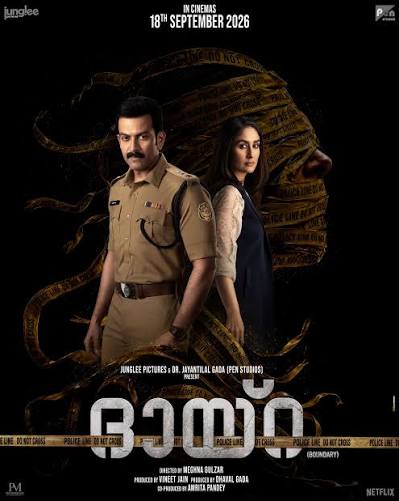
Discription
The year 1971 marked a pivotal moment in India's socio-political landscape, a time of transition and transformation. Within the opulent walls of a Rajasthani palace, Maharani Gitanjali resided, a princess steeped in the traditions of her royal lineage. The grandeur of her life, however, was shadowed by the looming directives of the Indian government's nationalization plan. This policy mandated that all royal families relinquish their ancestral wealth to the Reserve Bank of India, a measure aimed at redistributing resources and fostering economic equality.
Yet, Gitanjali's ancestors, driven by a blend of defiance and a sense of stewardship, had chosen a different path. They had retained their vast fortune, a decision that would cast a long shadow over Gitanjali's future. The years that followed were marked by increasing political tension, culminating in 1975 when Prime Minister Indira Gandhi declared a state of emergency. This period of authoritarian rule created an environment ripe for personal vendettas and political maneuvering.
Enter Sanjeev, the charismatic yet ruthless son of Indira Gandhi. His influence within the Congress government was substantial, and his ego, equally so. A chance encounter in 1973, where Gitanjali had publicly rebuffed his advances, left him seething with resentment. This slight festered, transforming into a burning desire for revenge.
Sanjeev, leveraging his political power, orchestrated a plan to dismantle Gitanjali's life. He enlisted the services of Colonel Rudra Pratap Singh, a military officer known for his unwavering loyalty and ruthless efficiency. Rudra was tasked with confiscating Gitanjali’s hidden gold and imprisoning her. The order was executed swiftly and brutally. Gitanjali, stripped of her wealth and freedom, was incarcerated, her palace walls replaced by the cold, unyielding bars of a prison cell.
Rudra, intent on fulfilling his orders, entrusted the transportation of the confiscated gold to his trusted lieutenants, Major Seher Singh and Captain Somesh. A custom-built truck, fortified with a formidable safe, was procured for this purpose. The journey to Delhi, where the gold would be deposited into the government's vaults, was set to begin.
Unbeknownst to Rudra and Seher Singh, Gitanjali had anticipated their move. She had dispatched her loyal aide, Sanjana, to eavesdrop on their conversations and gather intelligence. Sanjana, with her keen senses and unwavering devotion, managed to glean the details of their plan. Gitanjali, from her prison cell, formulated a counter-strategy. She entrusted her trusted lieutenant, Bhavani Singh, with the perilous mission of retrieving the gold and securing her release.
Gitanjali revealed the location of the hidden gold and explained her reasons for retaining it. She emphasized her responsibility towards the people of her village, who relied on her for sustenance and support. Bhavani, a man of unwavering loyalty and integrity, pledged to fulfill her request. He assembled a team comprising Daliya, Guruji, and Sanjana, each possessing unique skills vital to their mission.
The team embarked on their perilous journey, following the truck carrying the gold. Their pursuit was fraught with danger, as they navigated the treacherous terrain of Rajasthan, always one step ahead of Rudra and his forces. After a tense confrontation, they managed to seize control of the truck, leaving Seher Singh and Somesh stranded.
The next challenge was to breach the formidable safe. Guruji, a master of intricate mechanisms, was tasked with this crucial task. While Guruji worked diligently, Bhavani and his team remained vigilant, aware that Rudra and his forces were closing in.
Rudra, determined to recover the gold, enlisted the help of police officer Durjan. However, Bhavani and his team, through their resourcefulness and cunning, managed to outwit Durjan and evade capture. The chase was relentless, a high-stakes game of cat and mouse played across the arid landscapes of Rajasthan.
As Bhavani and his team drew closer to their objective, a disturbing truth began to emerge. Bhavani discovered that Gitanjali’s motives were not as altruistic as she had portrayed. He learned that Seher Singh, the very officer he had outmaneuvered, was in fact Gitanjali's accomplice. Gitanjali had manipulated Bhavani, using his loyalty to serve her personal agenda.
Bhavani, though initially shaken by this revelation, remained resolute. He confronted Gitanjali’s betrayal, and his team, united by a shared sense of justice, decided to redistribute the gold among the impoverished villagers who had suffered under Gitanjali’s rule.
A final confrontation ensued between Bhavani’s team and Seher Singh’s forces. The battle was fierce, a clash between loyalty and justice. In the end, Bhavani and his team emerged victorious. Gitanjali, abandoned and alone, was left to face the consequences of her actions in the harsh desert.
The gold, once a symbol of Gitanjali’s power and privilege, was now a beacon of hope for the downtrodden. Bhavani and his team, having exposed Gitanjali’s deceit, restored a measure of justice to the land. They had transformed a tale of greed and manipulation into a narrative of redemption and empowerment. The desert, once a symbol of isolation and despair for Gitanjali, now served as a silent witness to her downfall and the triumph of justice.