


Discription
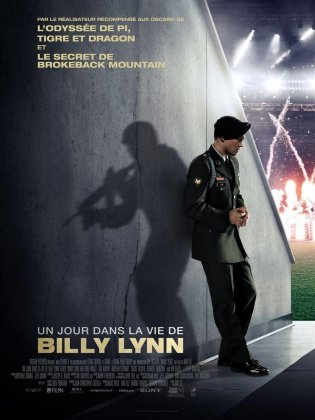
BILLY LYNN'S LONG HALFTIME WALK (2016)
Summary:
Billy Lynn's Long Halftime Walk tells the story of 19-year-old Billy Lynn, a decorated U.S. Army specialist, and his Bravo Company squad, who are hailed as heroes after a harrowing battle in Iraq. They are brought home for a two-week victory tour, culminating in a lavish Thanksgiving Day halftime show at a Dallas Cowboys football game. The film unfolds over the course of this single day, interweaving flashbacks to the brutal realities of combat with the surreal, celebratory spectacle of their temporary return to America.
As Billy navigates the overwhelming adulation, media circus, and attempts to commercialize his experience, he struggles to reconcile the profound trauma and brotherhood forged in war with the shallow, often exploitative hero-worship he encounters. His interactions with his family, a cheerleader he falls for, and a Hollywood producer attempting to buy his story, force him to confront the true meaning of heroism, sacrifice, and the stark disconnect between the battlefield and the home front, ultimately leading him to a pivotal decision about his future.
Keywords: Billy Lynn, 2016, Joe Alwyn, Kristen Stewart, Chris Tucker, Garrett Hedlund, Vin Diesel, Ang Lee, War, Drama, PTSD, Iraq War, Halftime Show, Heroism.
Plot:
The film opens with Specialist Billy Lynn, a 19-year-old soldier, and his Bravo Company squad, preparing for a Thanksgiving Day halftime show at a Dallas Cowboys game. Their presence in the stadium is part of a two-week "victory tour" across America, following an incident in Iraq where Billy was captured on camera bravely attempting to save his fallen squad leader, Sergeant Shroom, amidst intense enemy fire. The footage, dubbed "The Battle of Al-Ansakar Canal," has turned Billy and his comrades into national heroes. The atmosphere is one of overwhelming sensory input: flashing lights, roaring crowds, booming music, all processed through Billy's hyper-alert, almost dissociative state, a consequence of his combat experience.
Throughout the day, Billy experiences vivid flashbacks to Iraq, triggered by specific sounds, smells, or even the texture of objects. The most prominent and recurring flashback details the ambush that made them famous. Their convoy is hit, and Shroom, Billy's mentor and a spiritual figure within the squad, is critically wounded. Billy, defying orders, rushes across open ground to retrieve Shroom, engaging in hand-to-hand combat with an insurgent before being pulled to safety by Sergeant Dime, the squad's pragmatic and fiercely loyal leader. Shroom eventually dies in Billy's arms, a moment of profound loss that haunts Billy, contrasting sharply with the celebratory narrative being spun around his actions.
Back in Dallas, the squad is treated to a lavish meal and constantly surrounded by media, fans, and the opportunistic. Billy's sister, Kathryn, who has driven from their hometown, meets him. She is concerned about his mental state and his impending return to Iraq. She reveals that she feels responsible for him joining the army, as he enlisted after a fight where he smashed his ex-girlfriend's car in defense of Kathryn, who was being cheated on. Kathryn urges him to consider not returning to the war, having arranged for a psychologist to evaluate him for PTSD, which could lead to an honorable discharge. Billy, however, feels an unwavering loyalty to his squad, a brotherhood forged in the crucible of combat.
The squad's agent, Albert Ratner, attempts to broker a movie deal for their story with Hollywood producer Norm Oglesby. The proposed deal is for a paltry $65,000 per man, a sum that seems insulting given the sacrifices they've made. Oglesby's detached, corporate approach to their story further highlights the chasm between the soldiers' lived experience and the sanitized, marketable version Hollywood wants to sell. Billy, though initially intrigued by the possibility of financial security for his family, quickly becomes disillusioned by the superficiality of the negotiations and the producer's lack of genuine understanding.
Amidst the chaos, Billy forms a brief, intense connection with Faison, a Dallas Cowboys cheerleader. Their conversation, initially flirtatious, delves into deeper themes of faith and destiny. Faison, a devout Christian, sees Billy's survival and heroism as divine intervention, a perspective that clashes with Billy's own internal struggles and his more cynical view of the world post-Iraq. Despite their mutual attraction, the brief romance is tinged with the sadness of their impending separation, and Billy senses a fundamental misunderstanding of his reality even from someone he feels drawn to.
As the halftime show approaches, the squad is ushered onto the field, positioned on a rising stage amidst a pyrotechnic display and a performance by Destiny's Child. The noise, the lights, the smoke, and the sheer volume of the crowd create an overwhelming sensory assault that mirrors the chaos of battle. The soldiers, dressed in their uniforms, are mere props in a grand spectacle, their faces reflecting a mixture of awe, discomfort, and a profound sense of alienation. The experience is profoundly disorienting for Billy, who struggles to distinguish the reality of the stadium from the vivid, intrusive memories of Iraq.
The climax of the halftime show sequence occurs when a group of disgruntled stagehands, resenting the soldiers' presence and the perceived favoritism, instigate a confrontation. What starts as verbal taunts quickly escalates into a physical brawl. The soldiers, conditioned for combat and protective of their comrades, instinctively react with violence. The fight is brutally efficient, a stark reminder of their training and the raw aggression required for survival in war. This unexpected outburst of real-world violence in the midst of a fabricated spectacle further blurs the lines for Billy, highlighting the absurdity of their situation and the difficulty of reintegrating into civilian life.
Following the fight, the squad is reprimanded, and the movie deal falls through, as Oglesby's team uses the incident as an excuse to back out. The financial hope for his family evaporates. Billy has a final, emotional conversation with Kathryn, who reiterates her plea for him to stay. She confesses her fear that he will be killed and expresses her love and concern. Billy, however, feels an overwhelming sense of responsibility and belonging with his squad. He realizes that the only people who truly understand what he has been through are the men who fought alongside him.
As the bus prepares to take Bravo Company back to the airport and then back to Iraq, Billy makes his definitive choice. Despite the allure of a normal life, the love of his sister, and the opportunity to escape the war, he chooses to return with his brothers. His bond with his squad, particularly Sergeant Dime, is depicted as an unbreakable one, a source of identity and purpose that transcends the superficial hero-worship and commercial exploitation he experienced. The film concludes with Billy, resolute in his decision, boarding the bus with his squad, heading back to the war, forever changed by his brief, surreal encounter with the home front.
Cast (Lead Roles):
- Joe Alwyn as Billy Lynn
- Kristen Stewart as Kathryn Lynn
- Chris Tucker as Albert Ratner
- Garrett Hedlund as Sergeant Dime
- Vin Diesel as Sergeant Shroom
- Steve Martin as Norm Oglesby
- Makenzie Leigh as Faison
- Arturo Castro as Mango
- Ben Platt as Josh
- Ismael Cruz Córdova as Holiday
Crew:
- Director: Ang Lee
- Screenwriter: Jean-Christophe Castelli (based on the novel by Ben Fountain)
- Producers: Marc Platt, Ang Lee, Rhodri Thomas, Stephen Cornwell
- Cinematography: John Toll
- Editor: Tim Squyres
- Music: Mychael Danna, Jeff Danna
Release Info:
- Original Release Date: November 11, 2016 (USA)
- Language: English
- Genre: War, Drama
- Running Time: 113 minutes
- Accolades: Not widely recognized for major awards; noted for its pioneering use of 120 fps High Frame Rate (HFR) 3D technology.