

Discription
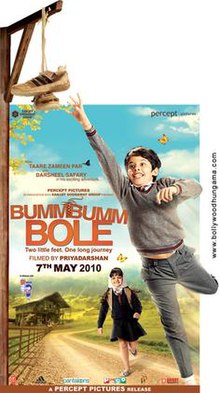
BUMM BUMM BOLE (2010)
Summary:
Bumm Bumm Bole is a poignant and emotionally resonant Hindi drama film from 2010, directed by Priyadarshan. It serves as a faithful remake of the critically acclaimed 2007 film "Taare Zameen Par" (Like Stars on Earth). The movie delves into the challenging world of Pinu, an eight-year-old boy who struggles academically and is often misunderstood by his parents and teachers. His perceived laziness and rebellious nature mask a deeper, undiagnosed learning disability, leading to frustration, isolation, and a profound sense of inadequacy.
The narrative takes a transformative turn when Pinu is sent to a boarding school, where he encounters Khogiram, an empathetic and unconventional art teacher. Khogiram, with his unique insights and observant nature, soon identifies Pinu's condition as dyslexia. Through a compassionate and innovative approach, Khogiram embarks on a journey to help Pinu overcome his challenges, rediscover his innate talents, and ultimately, gain acceptance and understanding from his family and the world around him. The film beautifully highlights the importance of individualized education, parental support, and the recognition of diverse learning styles.
Keywords: Bumm Bumm Bole, 2010, Darsheel Safary, Atul Kulkarni, Drama, Family, Dyslexia, Education.
Plot:
The story of Bumm Bumm Bole centers on Pinu (Darsheel Safary), a vibrant and imaginative eight-year-old boy whose world is a kaleidoscope of colors, dreams, and endless curiosity. However, this rich inner life stands in stark contrast to his struggles in the conventional academic environment. Pinu consistently fails in school, unable to grasp basic concepts like reading and writing, and often reverses letters and numbers. His notebooks are filled with doodles and fantastical drawings rather than neat assignments, leading his teachers to label him as lazy, disobedient, and a troublemaker. His parents, particularly his ambitious father, are exasperated by his poor grades and perceived lack of effort. They compare him unfavorably to his older brother, a diligent and academically successful student, inadvertently deepening Pinu's sense of failure and isolation. His mother, while more understanding, is largely swayed by her husband's stern approach and the teachers' negative reports.
Pinu's daily life is a series of reprimands and disappointments. He struggles with simple tasks, like tying his shoelaces or retrieving items from the store, often misinterpreting instructions due to his difficulty with processing information. His vivid imagination, which allows him to see letters and numbers dancing on the page, is perceived as distraction rather than a unique way of perceiving the world. One particularly distressing incident occurs when Pinu, unable to read the question on a math test, fabricates an elaborate story about a dog eating his homework, further cementing his image as a defiant child. The cumulative effect of these experiences leaves Pinu feeling utterly alone, misunderstood, and increasingly withdrawn. His once bright eyes begin to dim, and his natural enthusiasm wanes, replaced by a profound sadness and a growing fear of failure.
Driven by frustration and a belief that a stricter environment is necessary, Pinu's father makes the difficult decision to send him away to a boarding school. This move is devastating for Pinu, who feels abandoned and unloved. The transition to boarding school only exacerbates his emotional and academic woes. He becomes even more quiet and introverted, struggling to adjust to the rigid discipline and the absence of his family. His academic performance plummets further, and he finds himself unable to make friends, becoming a target for bullies. Pinu's creative spirit, once a source of joy, is stifled, and he retreats completely into himself, his drawings becoming darker and more solitary. He stops eating properly, becomes visibly thinner, and the light in his eyes almost completely extinguishes, alarming the school staff but leaving them at a loss on how to help him.
It is at this critical juncture that Khogiram (Atul Kulkarni), a new art teacher, arrives at the boarding school. Khogiram is an unconventional and empathetic educator, known for his unique teaching methods and his ability to connect with students on a deeper level. He notices Pinu's profound sadness and isolation, observing him closely during art classes and other activities. Unlike the other teachers, Khogiram doesn't dismiss Pinu's struggles as naughtiness or laziness; instead, he sees a child in distress. He reviews Pinu's past academic records and notes the consistent pattern of poor performance despite evidence of intelligence in other areas. Khogiram's own personal experience, having struggled with dyslexia himself in childhood, gives him a unique insight into Pinu's behavior.
Khogiram begins to suspect that Pinu might be dyslexic. He starts a meticulous investigation, examining Pinu's drawings, his handwriting, and his overall demeanor. He notices the characteristic letter reversals, the difficulty with spatial orientation, and the brilliant imagination that often accompanies dyslexia. Armed with this growing conviction, Khogiram takes a significant step: he travels to Pinu's home during a school break to meet his parents. He explains the concept of dyslexia to them, a neurological condition that affects reading, writing, and spelling, but has no bearing on intelligence. He patiently illustrates how Pinu perceives the world differently, showing them examples of famous individuals who were dyslexic but achieved greatness, like Albert Einstein and Leonardo da Vinci.
To further convince them, Khogiram presents Pinu's old drawings, which he had collected from his home, revealing the boy's incredible artistic talent and vivid imagination, aspects that had been overlooked in the shadow of his academic failures. He demonstrates how Pinu's difficulties with reading and writing are not a choice but a genuine hurdle, using analogies to help them understand the daily struggles Pinu faces. The parents are initially resistant, finding it hard to accept that their child has a "disability" and feeling a mix of guilt and disbelief. However, as Khogiram calmly and compassionately explains, showing them the scientific basis and the potential for intervention, they begin to grasp the truth. The realization dawns upon them, bringing with it a wave of regret for their harshness and misunderstanding. They finally understand the depth of Pinu's suffering and the reasons behind his behavior.
With the parents' consent and the school principal's cautious approval, Khogiram embarks on a mission to help Pinu. He requests permission to tutor Pinu individually, employing specialized teaching techniques tailored to dyslexic learners. He uses multi-sensory methods, incorporating tactile experiences, visual aids, and auditory cues to help Pinu learn to read and write. He encourages Pinu's artistic talents, using art as a medium to build his confidence and express himself. Khogiram teaches Pinu to trace letters in sand, to associate sounds with shapes, and to break down words into manageable parts. He patiently guides Pinu through exercises that help improve his spatial awareness and hand-eye coordination. Slowly but surely, Pinu begins to respond. The trust he places in Khogiram, combined with the personalized attention, starts to heal his emotional wounds.
As Pinu's confidence grows, his academic performance shows remarkable improvement. He starts to read simple words, his handwriting becomes clearer, and his fear of school begins to dissipate. More importantly, Pinu's vibrant personality re-emerges. He starts participating in school activities, making friends, and once again finding joy in his surroundings. The film culminates in an annual art competition held at the boarding school. Khogiram, knowing Pinu's exceptional talent, encourages him to participate. Pinu pours his heart and soul into his painting, creating a stunning and imaginative piece that beautifully captures his journey and inner world. To everyone's astonishment and delight, Pinu wins the first prize. Khogiram also participates, painting a heartfelt portrait of Pinu, which wins second prize, symbolizing the profound bond and understanding between teacher and student.
The art competition serves as a powerful testament to Pinu's transformation and the triumph of empathy and individualized education. Pinu's parents, who attend the event, are overwhelmed with emotion, seeing their son's talent recognized and his spirit rekindled. They embrace him, expressing their deep love and remorse for their past misunderstandings. The film ends on a hopeful note, with Pinu fully integrated into school life, no longer defined by his struggles but celebrated for his unique abilities. Bumm Bumm Bole is a powerful narrative about recognizing hidden potential, the profound impact of a compassionate teacher, and the critical importance of understanding and supporting children with learning disabilities, reminding us that every child is special, like a star waiting to shine.
Cast (Lead Roles):
- Darsheel Safary as Pinu
- Atul Kulkarni as Khogiram
- Rituparna Sengupta as Pinu's Mother
- Ziyah Vastani as Pinu's Sister
Crew:
- Director: Priyadarshan
- Producer: Percept Picture Company
- Original Story: Amole Gupte
- Screenplay: Manisha Korde
- Music Director: Pritam
- Cinematography: V. Manikandan
- Editor: N. Gopalakrishnan
Release Info:
- Original Release Date: May 7, 2010
- Language: Hindi
- Genre: Drama, Family
- Running Time: 123 minutes
- Accolades: Critical acclaim for its sensitive portrayal of learning disabilities and its faithful adaptation of the original story.