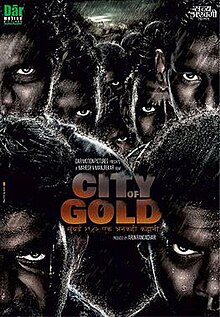


Discription
CITY OF GOLD (2010)
Summary:
City of Gold, originally titled "Lalbaug Parel" in Marathi, is a powerful and gritty drama that delves into the socio-economic upheaval faced by textile mill workers in Mumbai during the late 20th and early 21st centuries. Directed by Mahesh Manjrekar, the film meticulously chronicles the lives of a working-class family and their community as they grapple with the closure of the iconic textile mills, which once formed the backbone of Mumbai's economy and provided livelihoods to thousands. The narrative is a poignant exploration of shattered dreams, the erosion of traditional industries, and the desperate measures individuals are forced to take when their world crumbles around them.
The movie portrays the transformation of Mumbai from a city of mills into a metropolis dominated by real estate and service industries, seen through the eyes of those most affected by this shift. It highlights the struggles of a generation that dedicated their lives to the mills, only to find themselves jobless, dispossessed, and marginalized. The film is a stark commentary on urban development, class divide, and the human cost of progress, painting a vivid picture of the desperation, resilience, and eventual breakdown within a community struggling to survive in a rapidly changing environment.
Keywords: City of Gold, 2010, Ankush Chaudhari, Siddharth Jadhav, Sachin Khedekar, Mahesh Manjrekar, Marathi Film, Drama, Social Commentary, Mumbai, Textile Mills, Working Class, Lalbaug Parel.
Plot:
City of Gold opens by establishing the vibrant yet arduous life within Mumbai's Lalbaug-Parel area, a bustling hub centered around its numerous textile mills. The year is set in the late 1980s or early 1990s, a period when the textile industry, once the pride of Mumbai, began its irreversible decline. We are introduced to a typical working-class family, headed by Anna (played by Sachin Khedekar), a seasoned and principled mill worker who has dedicated his entire life to his craft. Anna embodies the dignity and pride of the working class, believing firmly in the value of hard labor and the stability provided by the mills. His family includes his wife, two sons, and a daughter, all living in a chawl, a traditional multi-story tenement characteristic of the area, where community bonds are strong and shared struggles are a daily reality.
The film quickly sets a somber tone as the whispers of mill closures turn into a harsh reality. The once-thriving mills, facing competition from power looms, changing government policies, and the lucrative real estate potential of their vast lands, begin to shut down one by one. This triggers massive unemployment, leaving thousands of workers like Anna in a state of shock and despair. The narrative focuses on how this economic devastation impacts Anna's family and their neighbors. Anna, despite his age and declining health, tries to cling to hope, participating in protests and union meetings, but the tide of change is too strong to resist. The once-secure world of the mill workers crumbles, replaced by uncertainty and poverty.
Anna's elder son, Shiv (Ankush Chaudhari), is a hot-headed but fundamentally decent young man who initially tries to find alternative employment. However, with limited education and skills tailored only for mill work, opportunities are scarce. The frustration of unemployment, coupled with the responsibility of his family, pushes him towards desperate measures. He witnesses his community's gradual disintegration – friends turning to petty crime, families breaking apart under financial strain, and the general loss of self-respect among men who can no longer provide for their loved ones. Shiv's anger and helplessness grow, making him susceptible to the lure of quick money, even if it means straying from the path of honesty and legality.
Anna's younger son, Naru (Siddharth Jadhav), represents a different response to the crisis. Initially more naive and less confrontational than Shiv, Naru also struggles to find his footing. He tries various odd jobs, often facing exploitation and humiliation. The film poignantly portrays the generational gap: while Anna struggles to comprehend a world without mills, his sons are forced to adapt to a harsh new reality without the safety net of steady employment. Naru’s character arc shows his gradual descent into the world of small-time crime and local gangs, seeing it as the only viable option for survival and a semblance of power in a society that has discarded him.
The narrative also explores the role of local strongmen and politicians who capitalize on the plight of the mill workers. These figures exploit the desperate situation, offering meager compensation or false promises in exchange for votes or participation in illegal activities. The land sharks and real estate developers emerge as the new power brokers, eyeing the valuable mill lands for commercial and residential complexes, further marginalizing the original inhabitants. The film makes a strong statement about how economic transformation, while bringing prosperity to some, often comes at the severe expense of others, creating a widening chasm between the rich and the poor.
As the family's financial situation deteriorates, tensions rise within the household. Anna’s wife struggles to manage the household with dwindling resources, and the children feel the pressure. Shiv becomes increasingly involved in the underworld, initially for survival, but gradually getting deeper into its clutches. His actions, while providing temporary relief to the family, also bring danger and moral compromise. Naru, following a similar trajectory, finds a sense of belonging and power within a local gang, a stark contrast to the powerlessness he felt as an unemployed youth. The film highlights the moral dilemmas faced by individuals forced to choose between starvation and criminality.
The climax of the film is a culmination of the simmering frustrations and tragic choices. The paths of Shiv and Naru, once intertwined by family bonds, diverge into a confrontation with inevitable and devastating consequences. The film does not offer easy answers or a triumphant resolution. Instead, it portrays the harsh reality of a community scarred by economic restructuring, where the dreams of a generation have been sacrificed at the altar of progress. The final scenes are a powerful and emotional commentary on the irreversible damage caused to human lives and social fabric when industries collapse and traditional livelihoods vanish. The chawls, once symbols of community and shared life, begin to crumble, mirroring the breakdown of the lives within them. The film ends on a poignant note, leaving the audience to ponder the true cost of urban development and the forgotten struggles of those who built the city.
Cast (Lead Roles):
- Ankush Chaudhari as Shiv
- Siddharth Jadhav as Naru
- Sachin Khedekar as Anna (Shiv and Naru's father)
- Sameer Dharmadhikari as Inspector Gaikwad
- Karan Patel as Rahul (Shiv's friend)
- Seema Biswas as Anna's wife
- Kishore Pradhan as Ganpat Kaka
- Vimala Raman as Shiv's love interest
- Vinay Apte as Mill Owner/Politician
Crew:
- Director: Mahesh Manjrekar
- Writer: Mahesh Manjrekar
- Producer: Mahesh Manjrekar, Laxmi Manjrekar
- Music Director: Ajit Parab, Atul Raninga
- Cinematographer: Ajit Reddy
- Editor: Sarvesh Parab
- Dialogue: Mahesh Manjrekar
Release Info:
- Original Release Date: April 9, 2010
- Language: Marathi (Released as "Lalbaug Parel: City of Gold")
- Genre: Drama, Social Commentary, Action
- Running Time: Approximately 145 minutes
- Accolades: Recognized for its strong social message and realistic portrayal of the Mumbai mill workers' plight.