


Discription
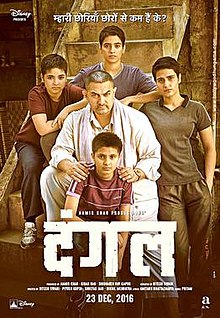
DANGAL (2016)
Summary:
Dangal is a biographical sports drama film that chronicles the inspiring true story of Mahavir Singh Phogat, a former amateur wrestler from Haryana, India, who, despite societal pressures and initial disappointment at not having a son, trains his daughters Geeta Phogat and Babita Kumari to become world-class female wrestlers. Defying the patriarchal norms of their rural village, Mahavir transforms his daughters into formidable athletes, pushing them through rigorous training regimes and challenging them to compete against boys, ultimately leading them to win medals for India on the international stage.
The film explores themes of gender equality, parental dedication, the pursuit of dreams, and the struggle against traditional mindsets. It highlights the arduous journey of Geeta, who becomes India's first female wrestler to win a gold medal at the Commonwealth Games, and her sister Babita, who also achieves significant success, thereby breaking barriers and inspiring a generation of women in sports.
Keywords: Dangal, 2016, Aamir Khan, Fatima Sana Shaikh, Sanya Malhotra, Zaira Wasim, Suhani Bhatnagar, Sports Drama, Biopic, Wrestling, India, Haryana, Commonwealth Games.
Plot:
The film opens in 1988, introducing Mahavir Singh Phogat, a former national-level wrestler in Haryana, India, who was forced to give up the sport due to financial constraints. His unfulfilled dream is to win a gold medal for India in wrestling. He vows that his future son will achieve this glory. However, Mahavir and his wife Daya Kaur have four daughters, much to Mahavir's initial disappointment and the relentless teasing from his neighbors. He resigns himself to the belief that his dream will never be realized, as wrestling is perceived as a male-dominated sport, and he sees no prospect of his daughters pursuing it.
Years later, a turning point arrives when Mahavir's two eldest daughters, young Geeta and Babita, aged 14 and 12 respectively, get into a fight with two boys who had insulted their mother. The girls impressively beat up the boys, much to the surprise and secret delight of Mahavir. Witnessing their raw strength and aggression, Mahavir has an epiphany: a gold medal is a gold medal, regardless of whether it's won by a boy or a girl. He realizes his daughters possess the inherent talent and spirit to become wrestlers. This moment ignites a renewed determination within him, and he decides to train Geeta and Babita to fulfill his long-cherished dream.
Mahavir's decision is met with widespread ridicule and opposition from his conservative village. Wrestling is considered an inappropriate pursuit for girls, and the villagers, including his own family, mock his ambition. Undeterred, Mahavir embarks on a strict and unconventional training regimen. He wakes his daughters up at 5 AM for grueling workouts, forcing them to run, lift weights, and practice wrestling moves. He cuts their hair short, much to their dismay and the further scorn of the community, to ensure no hair gets in their way during matches and to make them look more like wrestlers. He also alters their diet, forbidding them from eating spicy foods and forcing them to consume protein-rich meals. The girls initially resent their father's harsh methods, feeling deprived of their childhood and social life. They try to sabotage their training, even attempting to gain weight to avoid practice, but Mahavir is relentless and unwavering in his resolve.
The turning point for Geeta and Babita comes when they attend a wedding and see a young girl being married off against her will. The bride tearfully tells them how lucky they are to have a father who sees a future for them beyond marriage and domesticity. This realization profoundly impacts the sisters; they understand their father's sacrifice and the immense opportunity he is creating for them. From that day forward, their attitude shifts, and they embrace the training with dedication and passion. Mahavir arranges for them to wrestle against boys in local tournaments. Initially, the boys and their parents mock the idea of fighting girls, but Geeta and Babita, under Mahavir's expert guidance, begin to win matches, often dominating their male opponents. Their victories slowly start to silence the critics and earn them respect, not just in their village but also in neighboring areas. Geeta quickly becomes a local celebrity, and Babita follows closely in her footsteps.
Geeta's prowess eventually earns her a spot at the National Sports Academy in Patiala, where she is to be trained by the national coach, P.R. Kadam, in preparation for the Commonwealth Games. This marks a new chapter in her life and a significant departure from her father's traditional, hands-on coaching style. At the academy, Geeta is exposed to modern training techniques, different dietary plans, and a more relaxed atmosphere compared to her father's strict discipline. She begins to distance herself from Mahavir's methods, believing the academy's sophisticated approach is superior. She starts to lose matches, struggling to adapt to the new style and clashing with her father over strategic advice. Mahavir frequently visits the academy, offering counsel and pointing out flaws in her technique, but Geeta, influenced by her coach and newfound independence, dismisses his advice as old-fashioned and irrelevant. This creates a painful rift between father and daughter.
Geeta's performance suffers significantly, leading to a string of losses. Mahavir, deeply concerned, secretly watches her training sessions and matches, meticulously analyzing her weaknesses. He realizes that the academy's focus on points and defensive play has dulled her aggressive, attacking style, which was her strength. He begins to call her, offering advice, but she continues to resist. The turning point comes when Geeta faces a particularly tough opponent and loses badly. Humbled and realizing her mistakes, she tearfully calls her father, admitting she needs his guidance. Mahavir then resumes coaching her over the phone, meticulously analyzing her opponents' videos and providing tailored strategies, effectively becoming her remote coach, much to the chagrin of Coach Kadam, who views Mahavir as an interfering amateur.
Meanwhile, Babita also excels and joins Geeta at the National Sports Academy, continuing her journey towards national and international success. The sisters, now reunited, find strength in each other and their father's unwavering support. As the Commonwealth Games approach, Geeta's confidence and performance improve dramatically under her father's renewed guidance. The film builds towards the climax: Geeta's matches at the Commonwealth Games, particularly her gold medal bout. Each match is depicted with intense detail, showcasing her strategic thinking, resilience, and the culmination of years of hard work.
The final match, the gold medal bout, is against a formidable Australian opponent. The stakes are incredibly high. Before the match, Coach Kadam, feeling threatened by Mahavir's influence, locks Mahavir in a room, preventing him from being in Geeta's corner or offering last-minute advice. This act of sabotage adds immense pressure on Geeta, who relies heavily on her father's presence and tactical insights. Despite the absence of her father, Geeta remembers his training and his mantra: "Don't just win silver, win gold." The match is a nail-biting affair, with both wrestlers exchanging blows and points. In the final seconds, with the score tied and her opponent having the advantage, Geeta, recalling her father's specific advice on how to execute a particular move under pressure, performs a daring five-point "Dhobi Pachad" takedown. The move secures her the victory and the gold medal, making her the first Indian female wrestler to achieve this feat at the Commonwealth Games.
The film concludes with Mahavir, finally released from the room, watching his daughter's triumph on a television screen, tears of pride streaming down his face. Geeta stands on the podium, receiving her gold medal, the Indian national anthem playing in the background. Her victory is not just a personal achievement but a powerful statement against gender bias, inspiring countless young girls across India to pursue their dreams. The film ends with a montage of the real Geeta and Babita Phogat, highlighting their continued success and the lasting impact of Mahavir Singh Phogat's vision and dedication.
Cast (Lead Roles):
- Aamir Khan as Mahavir Singh Phogat
- Fatima Sana Shaikh as Geeta Phogat (adult)
- Sanya Malhotra as Babita Kumari (adult)
- Zaira Wasim as Young Geeta Phogat
- Suhani Bhatnagar as Young Babita Kumari
- Sakshi Tanwar as Daya Kaur (Mahavir's wife)
- Girish Kulkarni as P.R. Kadam (National Sports Academy coach)
- Aparshakti Khurana as Omkar (adult, Mahavir's nephew)
- Ritvik Sahore as Young Omkar
Crew:
- Director: Nitesh Tiwari
- Producers: Aamir Khan, Kiran Rao, Siddharth Roy Kapur
- Screenplay: Nitesh Tiwari, Shreyas Jain, Piyush Gupta, Nikhil Mehrotra
- Story: Nitesh Tiwari
- Music: Pritam
- Cinematography: Setu
- Editor: Ballu Saluja
- Production Company: Aamir Khan Productions, Walt Disney Pictures India
- Distributor: UTV Motion Pictures, Walt Disney Studios Motion Pictures
Release Info:
- Original Release Date: 23 December 2016
- Language: Hindi
- Genre: Biographical Sports Drama
- Running Time: 161 minutes
- Accolades: Winner of numerous awards including four Filmfare Awards (Best Film, Best Director, Best Actor, Best Action), three National Film Awards (Best Actor, Best Supporting Actress, Best Film on Other Social Issues), and several international honors. It became the highest-grossing Indian film worldwide.