


Discription
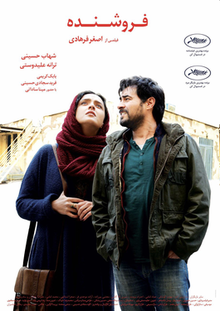
FORUSHANDE / THE SALESMAN (2016)
Summary:
Forushande, internationally known as The Salesman, is a gripping Iranian drama-thriller directed by Asghar Farhadi. The film follows Emad and Rana, a married couple who are also actors starring in a local production of Arthur Miller's "Death of a Salesman." Their lives are thrown into turmoil when their apartment building is damaged by nearby construction, forcing them to move into a new flat. This new home, however, carries a dark past that soon intrudes violently into their present.
After Rana is assaulted in their new apartment, Emad embarks on a relentless quest to identify her attacker, driven by a desperate need for justice and revenge. Rana, deeply traumatized and shamed, struggles to cope with the incident and resists involving the authorities, creating a profound rift in their relationship. The film masterfully explores themes of vengeance, masculinity, shame, and the moral complexities of justice, all while dissecting the fragile dynamics of a marriage under extreme duress.
Keywords: Forushande, The Salesman, 2016, Shahab Hosseini, Taraneh Alidoosti, Asghar Farhadi, Drama, Thriller, Iran, Revenge, Marriage, Trauma.
Plot:
The film opens with Emad and Rana, a married couple in Tehran, who are both high school teachers and amateur actors, currently performing in a local production of Arthur Miller's "Death of a Salesman." Their apartment building begins to collapse due to nearby construction, forcing a frantic evacuation. Emad and Rana barely escape with their lives as cracks spread rapidly through their home. Their friend and fellow actor, Babak, offers them an empty apartment he owns, which was previously occupied by a woman with a questionable reputation, whom the neighbors refer to as a prostitute.
Despite some initial reservations about the previous tenant, Emad and Rana move into the new apartment. One evening, Rana is alone in the apartment, taking a shower. She hears the doorbell ring, assumes it's Emad, and opens the door to the building's entrance without looking through the peephole. As she returns to the bathroom, an intruder enters the apartment, finds her, and assaults her. Rana sustains a head injury and is left in a state of shock and trauma. Emad returns home to find her bleeding and unconscious, rushing her to the hospital.
The incident leaves Rana deeply traumatized. She becomes withdrawn, fearful, and struggles to return to their apartment, often opting to stay with a neighbor. Crucially, she vehemently refuses to report the assault to the police, citing shame and a desire to simply forget and move on. She fears the social stigma and the intrusive questions that a police investigation would entail. Emad, initially supportive and concerned for his wife's well-being, soon finds himself consumed by a simmering rage and a desperate need for justice. Rana's refusal to involve the authorities leaves him feeling helpless and increasingly frustrated, driving a wedge between them.
Emad begins his own investigation, piecing together clues left by the assailant. He discovers a truck key, a wad of money, a mobile phone, and a child's hair clip – all items the attacker left behind in his hasty escape. The previous tenant, it becomes clear, had left some of her belongings in the apartment, and the attacker had likely mistaken Rana for her. Emad's focus narrows on the truck key. He spends hours searching various parking lots and gas stations until he finally locates the white pickup truck. He waits, observing the vehicle, until a young man arrives to retrieve it. Emad follows him, realizing the young man seems entirely innocent and unaware of any wrongdoing. He concludes that the truck must have been borrowed.
His patience pays off when an elderly man, frail and seemingly harmless, arrives to pick up the truck, claiming he borrowed it from his son-in-law to help a friend move. Emad observes the man closely, noticing a fresh cut on his leg, consistent with the description Rana gave of her attacker's injury. The old man's nervous demeanor and his vague explanations further heighten Emad's suspicions. Driven by a burning desire for retribution, Emad devises a plan. He calls the old man, pretending to be the young man he followed earlier, asking him to come back to the apartment to collect some items he supposedly left behind during the move.
The elderly man arrives at the apartment, unsuspecting. Emad confronts him, locking the door and revealing the evidence: the money, the phone, and the truck key. Overwhelmed and trapped, the old man confesses to the assault, explaining that he was a client of the previous tenant and had mistakenly believed Rana was her. He pleads for mercy, begging Emad not to reveal his secret to his family, emphasizing that they know nothing of his past indiscretions. The confrontation is tense and agonizing, with Emad struggling to control his rage and the old man crumbling under the weight of his guilt and fear.
At this critical moment, Rana unexpectedly returns home. Upon seeing the old man, she immediately recognizes him as her assailant. The shock and trauma of the memory trigger a severe panic attack. Emad tries to explain the situation, but Rana is too overwhelmed to process it. She demands that Emad let the old man go, her desire for peace overriding her initial trauma. However, Emad, consumed by his need for justice and revenge, ignores her pleas. He takes his retribution a step further. He calls the old man's family, pretending to be a landlord, informing them that the old man has fallen ill and needs to be picked up from the apartment. He intends to expose the man to his loved ones, believing that public shame is a more potent punishment than physical harm.
The old man's wife, daughter, and son-in-law arrive, worried about his supposed illness. Emad brings the old man into the living room, where he subtly, but devastatingly, reveals the old man's secret to his family. He shows them the wad of money and the mobile phone, letting them connect the dots without explicitly stating the assault. The old man, utterly humiliated and terrified, suffers a heart attack and collapses. His family rushes to his aid, horrified and confused by the sudden turn of events. Rana, witnessing the old man's collapse and the profound distress of his family, is struck by a wave of regret and empathy. She helps the family, offering water and support, realizing the destructive and far-reaching consequences of Emad's vengeful act. The "justice" Emad sought has only created more suffering and brokenness.
The old man is eventually taken away by his distraught family. Emad and Rana are left alone in the apartment, the silence heavy with the emotional fallout. The incident and Emad's subsequent actions have deeply fractured their relationship. Rana helps Emad clean up the old man's vomit, a symbolic act of trying to cleanse the mess created by Emad's pursuit of revenge. They sit in silence, the emotional distance between them palpable and perhaps irreparable. The film ends with Emad and Rana preparing for their play, the trauma, shame, and the profound moral cost of Emad's justice hanging heavy over their lives and their marriage, leaving the audience to ponder the true meaning of justice and revenge.
Cast (Lead Roles):
- Shahab Hosseini as Emad
- Taraneh Alidoosti as Rana
- Babak Karimi as Babak
- Mina Sadati as Sanam
- Farid Sajjadi Hosseini as The Old Man
Crew:
- Director: Asghar Farhadi
- Writer: Asghar Farhadi
- Producers: Alexandre Mallet-Guy, Asghar Farhadi
- Cinematography: Hossein Jafarian
- Editor: Hayedeh Safiyari
- Music: Sattar Oraki
Release Info:
- Original Release Date: May 21, 2016 (Cannes Film Festival)
- Language: Persian
- Genre: Drama, Thriller
- Running Time: 125 minutes
- Accolades: Academy Award for Best Foreign Language Film; Cannes Film Festival Awards for Best Actor (Shahab Hosseini) and Best Screenplay (Asghar Farhadi).