


Discription
HIDDEN FIGURES (2016)
Summary:
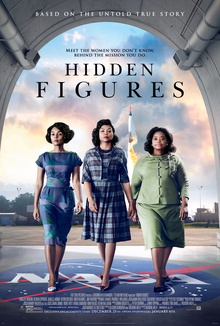
Hidden Figures tells the incredible, untold true story of three brilliant African-American women working at NASA – Katherine Johnson, Dorothy Vaughan, and Mary Jackson – who were the unsung mathematical minds behind one of the greatest operations in history: the launch of astronaut John Glenn into orbit. Their groundbreaking calculations were pivotal to the success of Project Mercury, overcoming immense racial and gender barriers in the process.
Set against the backdrop of the early 1960s Space Race and the Civil Rights movement, the film illuminates the struggles and triumphs of these women as they navigate a segregated workplace, fighting for recognition, promotion, and the right to contribute their full potential. Their perseverance not only helped America win the Space Race but also shattered social norms, paving the way for future generations.
Keywords: Hidden Figures, 2016, Taraji P. Henson, Octavia Spencer, Janelle Monáe, Kevin Costner, Drama, Biographical, History, NASA, Space Race, Civil Rights, Katherine Johnson, Dorothy Vaughan, Mary Jackson.
Plot:
The film opens in 1961, introducing Katherine Goble Johnson, Dorothy Vaughan, and Mary Jackson, three brilliant African-American women living in Hampton, Virginia, all employed by the National Advisory Committee for Aeronautics (NACA), which would soon become NASA. Katherine, a mathematical prodigy since childhood, is a widowed mother of three. Dorothy, a seasoned mathematician, effectively supervises the West Area Computers, a segregated group of African-American female mathematicians, despite not having the official title or pay. Mary, another bright mathematician, dreams of becoming an engineer.
The Space Race is in full swing, and the United States is desperate to catch up with the Soviet Union. Katherine is temporarily assigned to the Space Task Group, a highly sensitive and all-male, predominantly white engineering team led by Al Harrison, to perform analytic geometry calculations. Her new colleagues, particularly chief engineer Paul Stafford, are openly dismissive and unwelcoming. Katherine immediately faces blatant segregation; she is forced to use a "colored" coffee pot, which is physically separated from the main pot, and must walk half a mile across the campus to the only "colored" restroom. Her work is often given to her with crucial information redacted, making her job significantly harder, and her calculations are initially met with skepticism and distrust.
Meanwhile, Dorothy Vaughan continues to lead her team of "human computers" in the West Area, but her repeated requests for an official supervisory promotion are consistently denied by her prejudiced supervisor, Vivian Mitchell. Dorothy foresees the impending obsolescence of human computers with the arrival of the IBM 7090 electronic computer. She secretly begins teaching herself and her team FORTRAN programming language from library books, preparing them for the inevitable technological shift. She also faces daily indignities, such as being told she can't check out certain books from the "white" section of the library.
Mary Jackson, after demonstrating her mechanical aptitude and problem-solving skills, is encouraged by her supervisor, engineer Karl Zielinski, to apply for an engineering position. However, to qualify, she needs to take advanced engineering courses, which are only offered at a segregated white high school. Mary bravely decides to challenge this discriminatory rule in court, represented by a sympathetic lawyer. Her powerful and eloquent plea to the judge, highlighting the historical significance of her ambition and the need to break down racial barriers, ultimately persuades him to grant her permission to attend the classes.
Katherine's challenges at the Space Task Group intensify. She works tirelessly, often staying late to complete her complex calculations, which are crucial for determining the launch windows and trajectories for Project Mercury. Her long walks to the "colored" restroom become a source of frustration and delay. One day, Harrison confronts her about her frequent disappearances. Katherine, fed up, explodes, explaining the humiliating segregation she endures daily, including the separate coffee pot and the distant restroom. Harrison, previously oblivious or indifferent to her plight, is shocked and enraged. In a powerful moment, he takes a crowbar and smashes the "colored" restroom sign, declaring that at NASA, "we all pee the same color." He also removes the "colored" coffee pot, signaling a significant, albeit symbolic, step towards integration within his department.
As the date for astronaut John Glenn's orbital flight approaches, the pressure mounts. The newly installed IBM computer is programmed to perform the launch calculations, but a critical error is discovered in its output. Glenn, distrustful of the new technology and aware of Katherine's reputation for accuracy, specifically requests that "the girl" (Katherine) personally re-verify the IBM's calculations before he will agree to launch. Harrison gives Katherine the immense responsibility, and she works feverishly, using her exceptional mathematical abilities to re-calculate the complex trajectories and entry points, racing against the clock.
Meanwhile, Dorothy's foresight pays off. When the IBM computer is installed, the programmers struggle to make it operational. Dorothy confidently steps forward, demonstrating her team's mastery of FORTRAN. Vivian Mitchell, realizing the invaluable skill set Dorothy and her team possess, is finally forced to acknowledge Dorothy's leadership and officially promotes her to supervisor. Dorothy, in turn, ensures that her entire West Area team is transferred to the new computer programming division, securing their jobs and proving their worth in the new technological era.
On the day of John Glenn's launch, Katherine completes her calculations just in time. Harrison rushes her to the control room, where she delivers the verified figures, allowing the mission to proceed. Glenn's historic flight successfully orbits the Earth three times, making him the first American to do so. The nation erupts in celebration, and Katherine, Dorothy, and Mary watch with immense pride, knowing they played a crucial, albeit hidden, role in this monumental achievement.
The film concludes by highlighting the lasting impact of these three women. Katherine Johnson continued her illustrious career at NASA, calculating trajectories for the Apollo 11 moon landing and the Space Shuttle program, earning the Presidential Medal of Freedom in 2015. Dorothy Vaughan became NASA's first African-American supervisor and one of its first African-American programmers. Mary Jackson became NASA's first African-American female engineer. Their stories are a testament to their extraordinary intelligence, resilience, and unwavering determination to break down barriers and contribute to human progress, forever changing the landscape of science, engineering, and civil rights.
Cast (Lead Roles):
- Taraji P. Henson as Katherine Johnson
- Octavia Spencer as Dorothy Vaughan
- Janelle Monáe as Mary Jackson
- Kevin Costner as Al Harrison
- Kirsten Dunst as Vivian Mitchell
- Jim Parsons as Paul Stafford
- Mahershala Ali as Jim Johnson
Crew:
- Director: Theodore Melfi
- Screenplay by: Allison Schroeder & Theodore Melfi
- Based on the book by: Margot Lee Shetterly
- Producers: Donna Gigliotti, Peter Chernin, Jenno Topping, Pharrell Williams, Theodore Melfi
- Music by: Benjamin Wallfisch, Pharrell Williams, Hans Zimmer
- Cinematography: Mandy Walker
- Editor: Peter Teschner
Release Info:
- Original Release Date: December 25, 2016 (Limited); January 6, 2017 (Wide)
- Language: English
- Genre: Biographical, Drama, History
- Running Time: 127 minutes
- Accolades: Nominated for three Academy Awards (Best Picture, Best Adapted Screenplay, Best Supporting Actress for Octavia Spencer); Won Screen Actors Guild Award for Outstanding Performance by a Cast in a Motion Picture.