


Discription
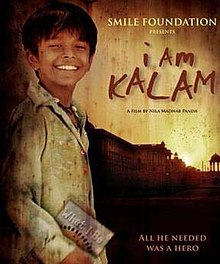
I AM KALAM (2010)
Summary:
I Am Kalam is a poignant and inspiring Hindi-language drama film that tells the story of Chhotu, a spirited and intelligent young boy from a poverty-stricken family in rural Rajasthan, India. Working at a roadside dhaba (eatery), Chhotu's life takes a dramatic turn when he witnesses the visit of the then-President of India, Dr. A.P.J. Abdul Kalam. Deeply inspired by Kalam's humble origins and rise to prominence through education, Chhotu renames himself 'Kalam' and harbors an intense desire to attend school and achieve greatness.
His dream seems impossible given his circumstances, but a chance friendship with Ranvijay, a lonely young prince from a nearby royal family, offers a glimmer of hope. Despite their vastly different social backgrounds, the two boys forge a secret bond, with Ranvijay secretly tutoring Chhotu. The film beautifully explores themes of class divide, the transformative power of education, the innocence of childhood friendship, and the enduring spirit of human aspiration against all odds. It culminates in Chhotu's determined quest to meet his idol, Dr. Kalam, believing it will be the key to unlocking his future.
Keywords: I Am Kalam, 2010, Harsh Mayar, Hussan Saad, Gulshan Grover, Nila Madhab Panda, Drama, Family, Education, Inspiration, Friendship, India.
Plot:
The film opens in the sun-baked, arid landscape of rural Rajasthan, where a young, bright-eyed boy named Chhotu (Harsh Mayar) toils away at a dilapidated roadside dhaba owned by the stern but ultimately good-hearted Bhati (Gulshan Grover). Chhotu, like many children in his village, is deprived of formal education, his days filled with serving tea, washing dishes, and running errands. Despite his difficult circumstances and the constant teasing from Laptan, another young boy working at the dhaba, Chhotu possesses an innate curiosity and a quick wit, often finding small moments of joy and wonder amidst his arduous routine.
A pivotal moment arrives when the entire village buzzes with excitement over the impending visit of the President of India, Dr. A.P.J. Abdul Kalam. Chhotu, along with other villagers, gathers to catch a glimpse of the revered leader. He is deeply captivated by Kalam's speech, particularly by the President's personal story of overcoming poverty through education to reach the highest office in the country. The words ignite a spark within Chhotu, a fervent desire to learn, to read, and to emulate his new idol. In a symbolic act of self-empowerment, he declares himself 'Kalam,' shedding his given name and embracing a new identity rooted in aspiration.
Chhotu's newfound dream, however, clashes with the harsh realities of his life. His family, struggling to make ends meet, cannot afford to send him to school, and Bhati, while fond of Chhotu, relies heavily on his labor. The idea of education for a poor dhaba boy seems like an impossible fantasy to most. Yet, Chhotu's determination remains unwavering. He begins to observe the children going to school, peering into classrooms with longing, and secretly trying to learn the alphabet from discarded newspapers and books.
His life takes an unexpected turn when he encounters Ranvijay (Hussan Saad), a lonely young prince from a nearby royal family. Ranvijay, confined by the strictures of his royal upbringing and burdened by the expectations of his lineage, yearns for a normal life and the freedom that Chhotu seemingly possesses. Their first meeting is accidental, but a unique friendship quickly blossoms between the two boys from starkly different social strata. Ranvijay, intrigued by Chhotu's intelligence and his dream, agrees to secretly teach him. Their clandestine meetings become a source of immense joy and learning for both. Ranvijay imparts basic literacy and numeracy, sharing his textbooks and knowledge, while Chhotu, in turn, offers Ranvijay a glimpse into a world beyond palace walls, a world of simple pleasures and genuine camaraderie.
Their secret arrangement is fraught with challenges. Bhati, ever vigilant, grows suspicious of Chhotu's frequent disappearances. Laptan, fueled by jealousy, often tries to expose their secret. Ranvijay's royal tutor and family also exert pressure, reminding him of his duties and discouraging contact with commoners. Despite these obstacles, the boys' bond strengthens, built on mutual respect and a shared yearning for something more than their pre-ordained lives. Lucy (Beatrice Ordeix), a French tourist staying at the dhaba, observes their unusual friendship with a keen eye, often offering quiet encouragement and understanding.
As the narrative progresses, news spreads that Dr. Kalam will be visiting the region again for a local event. For Chhotu, this is not just another visit; it represents his ultimate goal. He becomes consumed by the desire to meet his idol, believing that a personal encounter with the President will somehow validate his dreams and pave the way for his education. He confides in Ranvijay, who, despite his own fears of parental disapproval, pledges to help his friend. The boys hatch a daring plan to infiltrate the heavily guarded presidential event, relying on Ranvijay's princely status to navigate the security. They spend days meticulously planning their approach, fueled by Chhotu's unwavering hope and Ranvijay's loyal support.
The day of the event arrives, charged with nervous excitement. Dressed in clothes borrowed from Ranvijay, Chhotu tries to blend in with the privileged attendees. The boys face numerous hurdles: stern security guards, surging crowds, and the sheer impossibility of getting close to the President. There are moments of despair, near-misses, and the crushing weight of their social disparity. Just as hope seems to dwindle, and they are about to be turned away, a twist of fate, perhaps a benevolent glance from Lucy or a momentary lapse in security, allows Chhotu a fleeting opportunity. In a climactic moment, Chhotu, with a heart full of courage and a voice trembling with emotion, manages to utter a few words or make eye contact with Dr. Kalam, conveying his name and his dream. The exact interaction is left subtly ambiguous, emphasizing the symbolic power of the moment rather than a direct conversation.
The encounter, however brief, has a profound impact. While it doesn't instantly transform Chhotu's life, it solidifies his resolve and inspires those around him. Bhati, witnessing Chhotu's fierce determination, softens his stance. The film concludes with a powerful message of hope and the triumph of the human spirit. Chhotu is seen, perhaps not immediately enrolled in a prestigious school, but with a new school uniform and a bag, symbolizing the beginning of his journey towards education. His friendship with Ranvijay endures, a testament to the idea that true bonds transcend social barriers. The film leaves the audience with the understanding that while external circumstances may be challenging, the power of a dream, coupled with unwavering determination and the support of true friends, can indeed pave the way for a brighter future, echoing Dr. Kalam's own message that anyone, regardless of their background, can achieve greatness through hard work and education.
Cast (Lead Roles):
- Harsh Mayar as Chhotu / Kalam
- Hussan Saad as Ranvijay
- Gulshan Grover as Bhati
- Beatrice Ordeix as Lucy
- Pitobash Tripathy as Laptan
Crew:
- Director: Nila Madhab Panda
- Producer: Santanu Mishra, Vivek Khatani
- Writer: Sanjay Chauhan
- Music: Sushmit Sen
- Cinematography: Mohana Krishna
- Editor: Renjith Kumar
Release Info:
- Original Release Date: 20 August 2010 (India)
- Language: Hindi
- Genre: Drama, Family
- Running Time: 90 minutes
- Accolades: National Film Award for Best Child Artist (Harsh Mayar), Official Selection at Cannes Film Festival (2010), Best Feature Film at Providence Children's Film Festival (2011), Best Film at the Cinekid International Film Festival, Amsterdam (2010).