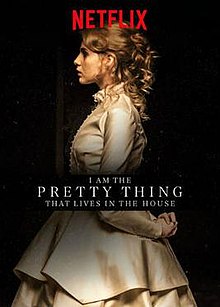



Discription
In the hushed solitude of Braintree, Massachusetts, stood a house steeped in an unsettling stillness, a silent testament to a history shrouded in mystery. It was here that Iris Blum, a celebrated author of horror tales, now resided in her twilight years, her mind adrift in the fog of dementia. The grand old house, isolated and remote, bore the spectral imprint of its past. Built with hopeful anticipation for a newlywed couple, its rooms remained eerily vacant, the promised life within never to materialize as the bride and groom vanished without a trace on their very wedding day, leaving behind an echoing emptiness.
Entrusted with the care of the ailing writer was Mr. Waxcap, Iris’s estate manager, a man of quiet efficiency who recognized the need for dedicated assistance. He engaged the services of Lily Saylor, a live-in nurse whose gentle demeanor and professional competence offered a semblance of order to the quiet chaos of Iris’s world. Little did Lily know that her arrival at the secluded residence would usher her into a realm where the boundaries between reality and the spectral blurred, where the chilling narratives of Iris’s imagination seemed to seep from the pages of her books into the very fabric of the house.
On her very first night within the house’s shadowed walls, an inexplicable event sent a shiver of unease down Lily’s spine. As she held the telephone, a sudden, violent force wrenched it from her grasp, the abrupt disconnection leaving a void filled with an unnerving silence. Later, a fleeting glimpse of a figure in white, receding into the darkness as if walking backwards through time, further unsettled her. An insidious presence began to manifest in the form of a patch of black mold that appeared on a wall, its tendrils slowly spreading, a creeping corruption that mirrored a deeper decay within the house itself. Adding to the growing disquiet, Lily frequently noticed a corner of the rug at the base of the stairs inexplicably flipped upwards, a minor yet persistent anomaly, especially considering she was the sole occupant of the first floor.
Iris, lost in the labyrinth of her fading memories, consistently addressed Lily as "Polly." Mr. Waxcap offered a simple explanation, stating that Polly was the central character in Iris’s most successful novel, "The Lady in the Walls." Intrigued, Lily sought out a copy of the book, hoping to gain some insight into Iris’s fractured reality. As she delved into the narrative, a disquieting realization dawned upon her. The novel hinted at a profound connection between Iris and Polly, suggesting that the author was not merely crafting a fictional tale but rather recounting a story from Polly’s own lifetime. The pages painted a vivid picture of 1812, where a woman named Polly, adorned in a wedding dress and a stark black blindfold, navigated the empty rooms of the very house Lily now inhabited, observed by the silent gaze of her husband.
One afternoon, in the mundane setting of the kitchen, a fleeting yet disturbing hallucination gripped Lily. She looked down at her arms and saw them grotesquely swollen, marred by the same ominous black mold that was slowly consuming the wall. The unsettling vision vanished as quickly as it appeared, leaving her shaken and questioning her own sanity. That evening, while passing a mirror, she caught a reflection of the figure in white standing silently in the room behind her. Whipping around, she found only empty space, the spectral image dissolving into the shadows. Driven by an inexplicable curiosity, Lily began to explore the house more intently, her search leading her to a moldy cardboard box tucked away in the dusty recesses of a forgotten closet. Inside, she discovered a collection of rough drafts, handwritten pages bearing the nascent form of "The Lady in the Walls." As she meticulously read through the author’s original thoughts and revisions, a chilling theory began to take root in her mind: what if the novel was not a work of fiction at all, but a veiled account of a real, brutal murder that had transpired within these very walls?
The narrative within the drafts transported Lily back to the year 1812, offering a horrifying glimpse into Polly’s final moments. Blindfolded and disoriented, Polly used her hands to navigate the unfamiliar space, her fingers tracing the cold surfaces of the empty rooms. She stumbled upon a section of wall where the wooden boards had been inexplicably removed, revealing the bare studs beneath – the very same section where the black mold was now relentlessly spreading in the present day. A flicker of confusion crossed Polly’s face as she instinctively raised her blindfold, her eyes locking with those of her husband, his expression unreadable. In that instant, the idyllic image of a wedding day shattered into a nightmare. Without warning, her husband raised a heavy hammer and brought it down upon her head, the brutal act silencing her confusion forever. He then concealed her lifeless body behind the exposed wall, entombing her within the very structure of their ill-fated home.
Compelled by her growing understanding of the house’s dark history, Lily attempted to discuss the unsettling parallels between the novel and the strange occurrences with Iris. However, the mention of Polly seemed to ignite a spark of fierce anger in the older woman’s clouded mind. Iris lashed out, her voice sharp with an inexplicable resentment, accusing Polly of betrayal and abandonment. Her disjointed words carried a chilling undercurrent, a stark reminder of mortality and decay: "Even the prettiest of things eventually rot." Later, a palpable shift in the atmosphere of Iris’s room signaled an unseen presence. Lily witnessed what appeared to be the spectral form of Polly leaning over Iris, her ethereal lips seeming to whisper unheard words into the old woman’s ear.
Drawn by a faint, scraping sound emanating from downstairs, Lily cautiously descended the creaking staircase. In the dim light, she found the wall boards, the same ones Polly had encountered in her final moments, now removed and piled haphazardly beside the relentlessly growing patch of mold. As Lily turned, her breath caught in her throat. Standing before her, translucent and sorrowful, was the unmistakable apparition of Polly. The shock and terror overwhelmed Lily’s senses, her heart seizing in a fatal attack.
Several days passed before Mr. Waxcap, growing concerned by the lack of contact, visited the house. He was met with a scene of profound stillness, discovering the lifeless bodies of both Lily and Iris within the silent rooms. Years later, the house, bearing the scars of its tragic past, welcomed a new family, unaware of the spectral presence that now silently watched over them – the lingering ghost of Lily Saylor, forever bound to the house and its secrets.