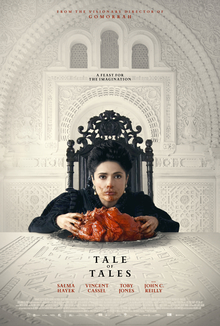



Discription
In the verdant expanse of the Kingdom of Longtrellis, a shadow of sorrow hung over the royal court. King Oberon and Queen Lyra, rulers of the land, were burdened by a profound grief – their union remained childless, an ache in their hearts that no royal decree could alleviate. Desperate for an heir, they sought counsel from a reclusive necromancer, a figure steeped in arcane knowledge and whispered secrets.
The necromancer, his eyes holding the wisdom of ages and the glint of the macabre, offered a cryptic solution. He revealed that if the Queen were to consume the heart of a sea dragon, prepared by the hands of a virgin, she would conceive. However, his words carried a chilling caveat: such a miracle would demand a life in return, a delicate balance between creation and sacrifice.
Driven by their yearning for a child, King Oberon embarked on a perilous quest, venturing into the treacherous depths of the ocean to confront the mythical sea dragon. He battled the formidable beast, his courage fueled by love and the hope of a future heir. Though victorious, the encounter proved fatal. King Oberon succumbed to his wounds, his triumph tinged with the bitter taste of sacrifice.
In the aftermath of the King’s valiant demise, a young virgin, a humble cook within the royal kitchens, was tasked with preparing the sea dragon’s heart. As she handled the mystical organ, an unforeseen consequence unfolded – she found herself with child. Queen Lyra, following the necromancer’s instructions, consumed the prepared heart, her hope rekindled amidst her grief. The following day, a miracle occurred. Queen Lyra gave birth to a son, a healthy boy named Elias, whose hair was as white as the scales of the slain dragon. Simultaneously, the virgin cook also brought forth a son, whom she named Jonah.
Fate, in its enigmatic design, had bestowed upon the kingdom two boys, identical in appearance, their bond immediate and unbreakable. Elias and Jonah became inseparable companions, their laughter echoing through the castle halls, their shared adventures weaving a tapestry of youthful camaraderie. However, their profound connection became a source of deep vexation for Queen Lyra. Haunted by the necromancer’s prophecy and perhaps by the unusual circumstances of their births, a dark seed of resentment took root in her heart.
Consumed by an irrational jealousy, the Queen plotted to eliminate Jonah, viewing him as an unwelcome reminder of the sacrifice and a rival to her own son. One fateful day, her malevolent intentions manifested in a direct attempt on Jonah’s life. The young boy, sensing the danger, managed to evade her deadly grasp and fled the castle, his heart heavy with betrayal. Before departing, Jonah plunged a knife deep into the root of an ancient tree within the castle grounds. Turning to Elias, his voice filled with a sorrowful certainty, he declared that as long as the root continued to sprout clear water, Elias would know that he was alive and well.
Time passed, marked by the seasons and the quiet anxieties within the castle walls. One day, a chilling discovery sent a wave of dread through Elias. The water seeping from the tree root, once clear and life-affirming, was now clouded with blood, a horrifying sign that his beloved Jonah was in grave danger. Without hesitation, Elias resolved to leave the kingdom and find his lost friend, his loyalty unwavering.
Meanwhile, Queen Lyra, consumed by a growing paranoia and regret, ordered her subjects to search for Elias, fearing his departure and the implications of his absence. Despite their diligent efforts, Elias remained elusive, vanished as if swallowed by the very forests surrounding the kingdom. The necromancer, summoned once more to the Queen’s presence, offered a grim pronouncement. He reiterated the inseparable nature of the two boys, their fates intertwined. He warned the Queen that her violent desires could only be achieved through further violence, hinting at a tragic destiny that lay ahead.
Guided by an invisible thread of connection, Elias eventually found Jonah wounded and weakened within the depths of a secluded cave. Their reunion, however, was short-lived. A monstrous creature, drawn by the scent of blood, emerged from the shadows, its eyes glinting with predatory hunger. It lunged at Jonah, inflicting further wounds, but hesitated when it turned its gaze upon Elias, an inexplicable reluctance in its savage demeanor. Elias, fueled by a fierce protectiveness, fought the monster with unwavering courage, ultimately slaying the beast and ensuring Jonah’s safety. He then carefully carried his injured friend back to the sanctuary of Jonah’s wife, their bond reaffirmed in the face of mortal danger. Unbeknownst to Elias, within the depths of the cave, the slain monster’s corpse began to dissolve and transform, its grotesque form slowly morphing into the lifeless visage of Queen Lyra, a chilling testament to the necromancer’s cryptic prophecy.
In a distant realm, the Kingdom of Strongcliff stood under the rule of a lustful king, a man whose desires often overshadowed his royal duties. One day, his attention was captured by the ethereal sound of a woman’s heavenly singing, a melody that resonated with a profound beauty and stirred a primal longing within him. Intrigued and captivated, he sought out the source of this enchanting voice, courting the singer outside her humble dwelling, unaware of a deceptive truth.
The singer was one of two elderly sisters, Imma and Dora. Dora, shrewd and perhaps weary of their secluded existence, agreed to spend the night with the King, but only under the cloak of absolute darkness. The following morning, when the King finally beheld her true appearance in the harsh light of day, he was overcome with revulsion. His initial infatuation turned to utter horror at the sight of her aged features. In a fit of cruel disgust, he commanded his guards to throw her out of a cliffside window, a brutal act fueled by his shattered illusions.
Miraculously, Dora survived the fall, her body becoming entangled in the branches of a sturdy tree that grew precariously close to the cliff’s edge. Her plight did not go unnoticed. A reclusive witch, dwelling in the shadows of the surrounding wilderness, discovered the injured woman and, taking pity on her, nursed her back to health, offering sustenance from her own breast. Slowly, miraculously, Dora awakened, not as the old woman the King had scorned, but as a young maiden of breathtaking beauty, her transformation a testament to the witch’s enigmatic powers.
Fate, it seemed, had a twisted sense of irony. The King of Strongcliff, while hunting in the nearby forests, stumbled upon the radiant Dora, his memory of her former appearance completely erased by her astonishing metamorphosis. Struck by her beauty, he was instantly smitten and resolved to make her his Queen. Dora, harboring a secret knowledge of his past cruelty, accepted his proposal.
As the wedding day approached, Dora extended an invitation to her sister, Imma, promising to care for her. However, she stipulated that Imma could not reside within the castle walls, perhaps fearing the revelation of their shared past. Imma, suspicious and envious of her sister’s newfound youth and beauty, refused to leave. She pressed Dora for the secret of her transformation, desperate to reclaim her own lost youth. In a moment of exasperated annoyance, Dora blurted out that she had gotten herself flayed, a shocking and gruesome explanation.
Eventually, Imma’s persistent presence and her violation of the royal couple’s privacy within their bedroom led to her expulsion from the castle. Driven by a desperate desire for the same transformation, Imma sought out someone willing to perform the horrific act she believed had restored her sister’s youth. She found a willing accomplice, and the gruesome procedure left her bloody, disfigured, and far from the beauty she had so desperately sought.
In another kingdom, nestled amidst towering peaks, lay the Home of the King of Highhills and his beloved daughter, Violet. The King, a man of peculiar fascinations, became utterly captivated by a common flea that had found its way into his royal chambers. He took the tiny creature as a pet, lavishing it with attention and care. Under his unusual patronage, the flea grew to an astonishing size, becoming a bizarre and enormous companion.
When, inevitably, the giant flea met its demise, the King, in his eccentric manner, decided to skin the colossal insect. Meanwhile, his daughter, Violet, reached an age where thoughts of marriage began to blossom in her heart. Sensing her desire, the King devised a peculiar contest. He declared that he would offer Violet’s hand in marriage to whosoever could correctly identify the beast from whose hide the enormous skin was taken, believing that the answer was so obscure that no one could possibly guess it.
However, an ogre, drawn by an unusual scent emanating from the castle, correctly identified the hide by its distinct odor. Violet was understandably horrified at the prospect of marrying such a monstrous creature, but her father, bound by his own decree, insisted that he could not go back on his word. With a heavy heart, Violet went through with the marriage ceremony, her words to her father laced with a bitter resentment: "You never loved me."
The ogre took Violet to his dwelling, a dark and foreboding cave, where she was held captive. Desperate for escape, Violet’s pleas for help eventually reached a traveling family of acrobats. They bravely assisted her in a daring escape from the ogre’s lair. However, the ogre, enraged by her flight, pursued them relentlessly, his monstrous strength leading to the tragic deaths of the entire acrobatic family. In a moment of cunning and desperation, Violet managed to mollify the ogre, lulling him into a false sense of security before seizing an opportunity to slit his throat, ending his reign of terror.
Returning to her father’s castle, Violet found the King gravely ill, consumed by a mysterious ailment perhaps born of guilt or sorrow. She revealed her grim trophy – the severed head of the ogre, the husband he had “chosen” for her. The sight of the monstrous head sent the King to his knees, his body wracked with sobs, a display of grief mirrored by his stunned courtiers. In that moment of shared sorrow, Violet, too, began to weep, the complexities of her ordeal overwhelming her.
Time moved forward, and amidst the shifting tides of fate, Violet’s coronation as Queen was announced. Among the esteemed guests were Elias, now a young man bearing the mark of his dragon-touched heritage, Dora, her beauty still radiant despite the passage of time, and the King of Strongcliff, oblivious to the true identity of the woman who now graced his presence. At the coronation ceremony, Elias offered a subtle nod of acknowledgment to Violet and the King of Strongcliff, a silent acknowledgment of their intertwined destinies. As Violet’s father, frail but present, walked her towards the throne, the assembled crowd turned their gaze skyward, drawn by a spectacle above. An entertainer, defying gravity and death, walked a precarious tightrope of fire, a dazzling and dangerous display. Amidst the grandeur and the spectacle, Dora’s unnatural beauty began to subtly fade, the magical enchantment that had sustained it perhaps waning. Unnoticed by the assembled dignitaries, she quietly slipped away from the castle, disappearing into the shadows, her fleeting youth a secret carried into the night.