

Discription
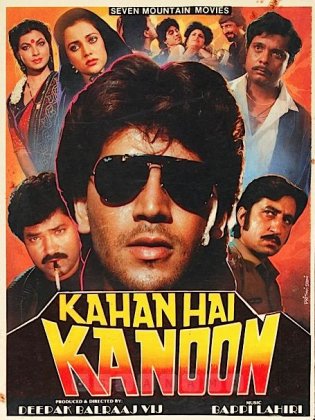
KAHAN HAI KANOON (1989)
Summary:
Kahan Hai Kanoon is a gripping 1989 Hindi legal drama that delves into the profound injustices faced by ordinary citizens at the hands of a corrupt legal system and powerful societal forces. The film follows the relentless journey of advocate Ravi Verma, a principled lawyer, as he takes on the seemingly insurmountable case of Shankar, a humble factory worker wrongfully accused of murder. Through a labyrinth of deceit, political maneuvering, and personal sacrifice, Ravi battles not just the opposing counsel, but the very fabric of a society where truth is often a casualty and justice a luxury.
The movie masterfully portrays the emotional toll on those caught in the legal quagmire, highlighting themes of integrity, perseverance, and the enduring human spirit in the face of adversity. It questions the efficacy and fairness of the law when wielded by the influential, and ultimately serves as a powerful commentary on the struggle for righteousness in a world riddled with moral ambiguities. The climax culminates in a dramatic courtroom showdown, where Ravi's conviction and eloquence are put to the ultimate test against a system designed to protect the guilty.
Keywords: Kahan Hai Kanoon, 1989, Legal Drama, Justice, Corruption, Courtroom, Ravi Verma, Shankar.
Plot:
The film opens in a bustling industrial town, introducing Shankar, a diligent and honest factory worker. He lives a simple life with his loving wife, Radha, and their young daughter, Meena. Shankar is known for his integrity and his refusal to partake in the petty corruption prevalent in the factory, often clashing with the conniving foreman, Jaggu, who is a stooge for the factory owner, Seth Dharamdas. Dharamdas is a powerful industrialist, deeply entrenched in local politics, and notorious for exploiting his workers and bending laws to his will. Shankar's refusal to sign off on a falsified safety report, which would endanger his fellow workers, marks him as a target for Dharamdas and Jaggu.
One fateful evening, a fire breaks out in the factory, resulting in several casualties. The fire is deliberately set to destroy evidence of hazardous working conditions and to claim insurance money. Jaggu, under Dharamdas's orders, frames Shankar for arson and murder. Shankar, who was attempting to save trapped workers, is found unconscious near the scene with a wrench in his hand, making him the prime suspect. The local police, already on Dharamdas's payroll, swiftly arrest Shankar, suppressing any evidence that might point to Dharamdas. Shankar's pleas of innocence fall on deaf ears, and he is brutally beaten into a confession he didn't make. Radha, devastated and helpless, tries to seek justice but is met with indifference and threats from Dharamdas's goons.
Enter Ravi Verma, a young, idealistic lawyer who has just returned to his hometown after studying law in the city. Ravi is known for his unwavering commitment to justice and his disdain for the corrupt practices that plague the legal system. He comes from a modest background, his father having been a victim of similar injustices, which fuels Ravi's passion. Radha, hearing of Ravi's reputation, approaches him as a last resort. Initially hesitant due to the overwhelming evidence against Shankar and the formidable power of Seth Dharamdas, Ravi is moved by Radha's unwavering faith in her husband's innocence and the sheer desperation in her eyes. He agrees to take the case, knowing it will be an uphill battle against a system designed to protect the powerful.
Ravi begins his investigation, facing immediate resistance. Police records are doctored, witnesses are intimidated, and crucial evidence disappears. He quickly realizes that Dharamdas's influence permeates every level of the local administration. Ravi's mentor, a seasoned but cynical lawyer named Mr. Saxena, warns him about the futility of fighting such a powerful adversary, advising him to compromise. However, Ravi's resolve only strengthens. He uncovers small inconsistencies: the wrench found near Shankar was not standard factory issue, the fire alarm system was deliberately disabled, and a specific ventilation shaft, supposedly closed for repairs, was actually open, creating a draft that fueled the fire faster than usual.
His investigation leads him to a former factory worker, Ramu, who was fired by Dharamdas for whistleblowing about unsafe conditions. Ramu is initially terrified to speak, but Ravi's persistence and promise of protection convince him to reveal that Jaggu had been seen tampering with electrical wiring shortly before the fire. This is a crucial breakthrough, but Ramu later disappears, likely kidnapped or silenced by Dharamdas's men. Ravi understands that he needs irrefutable proof to stand a chance in court. He also discovers that Dharamdas had recently taken out a massive insurance policy on the factory, specifically covering fire damage, just weeks before the incident, raising a huge red flag.
The trial begins, and it is a spectacle of manipulation. Dharamdas's lawyer, the renowned and ruthless Mr. Sinha, is a master of rhetoric and misdirection, easily discrediting Ravi's initial arguments. The prosecution presents a seemingly watertight case against Shankar, painting him as a disgruntled employee seeking revenge. Shankar, broken by his ordeal, struggles to articulate his innocence, further cementing the prosecution's narrative. Ravi faces immense pressure, not just from the opposing side, but also from within his own community, with many believing he is fighting a lost cause and risking his career.
Undeterred, Ravi focuses on the scientific aspects of the fire. He consults with an independent fire expert, Professor Gupta, who, after much persuasion and a promise of anonymity, agrees to examine the limited photographic evidence Ravi managed to procure. Professor Gupta's analysis confirms that the fire spread in a manner inconsistent with Shankar's alleged actions and points towards a deliberate act of arson involving specific accelerants and a pre-planned ignition point. This expert testimony becomes Ravi's trump card. However, securing Professor Gupta's appearance in court without him being compromised becomes another challenge. Ravi has to arrange for his secret transport and protect him until he can testify.
During the intense cross-examination of Jaggu, Ravi meticulously exposes his lies and inconsistencies. He presents evidence of Jaggu's past criminal record and his financial dealings with Dharamdas, suggesting a clear motive for complicity. When Ravi brings up Ramu's disappearance, Jaggu visibly falters, revealing a crack in his composure. Ravi then drops the bombshell: the insurance policy. He presents documents showing Dharamdas significantly increased his fire insurance coverage just before the incident, arguing that this provides a strong financial motive for arson. Mr. Sinha objects furiously, but the judge allows the line of questioning, as it directly challenges the prosecution's narrative of Shankar's sole culpability.
The climax arrives with Professor Gupta's testimony. He scientifically dismantles the prosecution's theory, explaining how the fire's origin and spread pattern point away from Shankar and towards a professional arsonist. He details the specific accelerants used, which could not have been present in Shankar's possession, and explains how the disabled alarm system and open ventilation shaft exacerbated the tragedy. Under Ravi's skillful questioning, Professor Gupta's expertise becomes undeniable, sowing seeds of doubt in the judge's mind and turning public opinion. In a dramatic turn, Ravi produces a hidden camera footage (which he secretly obtained from a sympathetic security guard at great personal risk) showing Jaggu, assisted by two other men, tampering with the factory's electrical panel and spreading flammable liquid just hours before the fire. The footage is grainy but damning.
Cornered and exposed, Jaggu finally breaks down on the witness stand, confessing his role in framing Shankar under Dharamdas's coercion. He reveals Dharamdas's entire plan: to burn down the factory for insurance money, eliminate evidence of unsafe conditions, and silence Shankar who was becoming a nuisance. Dharamdas, present in the courtroom, attempts to flee but is apprehended. The courtroom erupts in chaos and then applause. The judge, after careful deliberation, declares Shankar innocent and orders a full investigation into Seth Dharamdas and his accomplices. The film concludes with Shankar's emotional reunion with Radha and Meena, a testament to the power of truth and the relentless pursuit of justice. Ravi Verma emerges as a hero, having not just saved an innocent man, but also restored faith in the principle, "Kahan Hai Kanoon" (Where is the Law?) by showing that it can, indeed, be found and upheld, even in the darkest corners of corruption.
Cast (Lead Roles):
- Mithun Chakraborty as Advocate Ravi Verma
- Padmini Kolhapure as Radha (Shankar's Wife)
- Danny Denzongpa as Seth Dharamdas
- Shakti Kapoor as Jaggu (Foreman)
- Naseeruddin Shah as Shankar (Factory Worker)
- Amrish Puri as Mr. Sinha (Dharamdas's Lawyer)
- Om Shivpuri as Mr. Saxena (Ravi's Mentor)
Crew:
- Director: Raj N. Sippy
- Producer: B.R. Chopra
- Screenplay: Sachin Bhowmick
- Dialogue: Rahi Masoom Raza
- Music Director: Laxmikant-Pyarelal
- Cinematography: Ashok Mehta
- Editor: Waman Bhonsle
Release Info:
- Original Release Date: May 12, 1989
- Language: Hindi
- Genre: Legal Drama, Thriller, Social
- Running Time: 165 minutes
- Accolades: Nominated for Filmfare Award for Best Dialogue (Rahi Masoom Raza)