

Discription
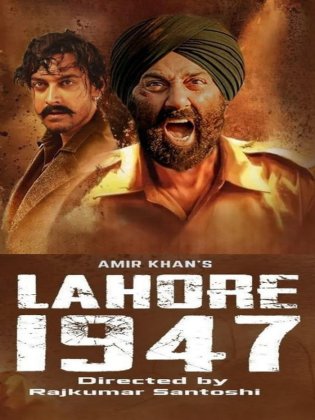
BATWARA 1947 (2026)
Summary:
Batwara 1947 (originally announced as Lahore 1947) is an upcoming Indian Hindi-language historical period drama film directed by the legendary Rajkumar Santoshi (Ghayal, Damini, Ghatak) and produced by blockbuster mastermind Aamir Khan under Aamir Khan Productions. Set against the turbulent, blood-soaked backdrop of the Partition of India in 1947, the film marks the highly anticipated big-screen comeback of Preity Zinta alongside action icon Sunny Deol after an eight-year hiatus. Based on Asghar Wajahat’s critically acclaimed and historically significant play, Jis Lahore Nai Dekhya, O Jamyai Ni ("One who has not seen Lahore has not been born"), the narrative explores a deeply emotional and humanistic struggle over identity, belonging, and empathy. The story follows a displaced Muslim family that moves into a grand Lahore haveli, only to find an elderly Hindu woman still living inside who refuses to surrender her home. Keywords: Batwara 1947 Movie, Lahore 1947 Title Change, Sunny Deol New Movie, Aamir Khan Productions, Preity Zinta Comeback, Indian Partition Drama.
Plot:
The sweeping, heartbreaking saga of Batwara 1947 begins in the chaotic and terrifying autumn of 1947, during the largest mass migration in human history. The narrative centers on the Mirza family, led by their proud and principled patriarch, Sikandar Mirza (Sunny Deol), a 55-year-old Muslim man from Lucknow. Forced to abandon their ancestral roots, their home, and their cherished memories in India due to the violent fires of the Partition, the Mirzas embark on a perilous, exhausting journey across the newly formed border to the promised land of Pakistan. Upon their arrival in the bustling, culturally rich city of Lahore, they find themselves placed in a massive refugee camp, waiting for resettlement. Eventually, the custodian of evacuee property allocates them a grand, opulent 24-bedroom haveli in the heart of Lahore. The mansion, which previously belonged to a wealthy Hindu jeweler who allegedly fled the violence, represents a fresh start and a beacon of hope for the displaced, traumatized family.
The atmosphere of hope is abruptly shattered during their first night of exploration. As the family excitedly wanders through the dusty, labyrinthine corridors of their new home, Sikandar’s daughter discovers a shadow moving in a locked room in the deepest corner of the mansion. Terrified, the family prepares to confront an intruder, only to discover Mai (Shabana Azmi), an elderly, frail Hindu woman. Having lost her entire family, including her beloved son Ratan, to the horrific riots that ravaged the city, Mai had hidden in the mansion during the looting. Despite the mass exodus of her community, she steadfastly refuses to leave her ancestral home. She insists that the bricks of the haveli are mixed with the sweat of her ancestors and that no political line drawn in a map can rob her of her home.
The discovery sparks an immediate, tense standoff. The Mirza family, having suffered painful displacement and material loss in India, feels entirely entitled to the state-allocated property. They demand that Mai pack her belongings and cross the border to India, pointing out the absurdity of a lone Hindu woman trying to survive in a rapidly homogenizing, hostile Lahore. However, Mai has nowhere to go and stands her ground, not with weapons, but with a quiet, maternal dignity. Sikandar Mirza, a deeply religious and moral man, is caught in a profound ethical dilemma. While his family needs shelter, his conscience revolts against the idea of throwing an old, defenseless widow out into the dangerous streets where bloodthirsty mobs are actively looking for remnants of the minority community.
Slowly, the domestic dynamic begins to shift. Mai’s boundless warmth, her gentle nature, and her resilience begin to melt the cold defenses of the Mirza family. She begins cooking for them, tending to their emotional wounds, and sharing rich stories of Lahore's peaceful past. In her, Sikandar’s wife, Hamida Mirza (Preity Zinta), finds a mother figure, and the children find a doting grandmother. The Mirza family realizes that the "enemy" they were told to hate is simply a grieving, loving human being who is as much a victim of the Partition as they are. They officially adopt her into their household, vowing to protect her and keep her presence a secret from the outside world.
The fragile peace within the haveli is threatened when the local neighborhood begins to notice signs of a Hindu presence in the mansion. The film shifts into a gritty, suspenseful thriller as local goons and religious fundamentalists, led by a ruthless local politician and brute named Yaqoob Pehalwan (Abhimanyu Singh), discover Mai’s existence. Yaqoob and his henchmen care nothing for religious purity; they see Mai as a convenient excuse to incite communal hatred and intimidate the Mirzas, with the ultimate goal of seizing the prime real estate of the jeweler’s haveli for themselves. They try to leverage religious fervor, pressuring local clerics to declare the Mirza family's cohabitation with a non-Believer as un-Islamic.
Sikandar Mirza stands as a towering wall against this localized terror. Supported by a progressive local poet (Ali Fazal) and a deeply compassionate, tolerant local Islamic priest, Sikandar publicly defends Mai. He argues that the essence of humanity and true religion lies in protecting the vulnerable, not persecuting them. This stance puts the Mirza family in the crosshairs of the local mafia. The narrative builds toward an intense, violent climax as Yaqoob’s men launch a series of coordinated attacks on the haveli, forcing the Mirzas to physically defend their home and their adopted mother.
The emotional core of the film reaches its devastating peak when Mai, having lived her final months surrounded by the love, dignity, and respect of her newly adopted Muslim family, passes away peacefully due to natural causes. Her death, however, triggers an even greater conflict. The local goons refuse to allow her body to be cremated according to Hindu rites within the city, wishing to dump her remains in an unmarked grave to erase her legacy. Sikandar Mirza, having promised Mai that he would honor her faith in life and in death, refuses to back down.
The climax of the film features a massive, visually spectacular confrontation. Sikandar and a small, brave group of progressive Lahore citizens take to the streets to defend Mai’s funeral cortege against a violent, armed mob. The battle is raw, emotional, and brutal—a visceral clash between the toxic forces of division and the enduring spirit of human brotherhood. The film concludes with a poignant, tearful cremation ceremony, serving as a powerful victory for human decency. The Mirza family is left to pick up the pieces, knowing they have kept their honor intact. The final shots of Batwara 1947 are a quiet, reflective meditation on the shared heritage of the subcontinent, delivering a timeless message that while politicians and borders can partition land, they can never partition the human soul.
Cast:
-
Sunny Deol as Sikandar Mirza (The Mirza Family Patriarch)
-
Preity Zinta as Hamida Mirza (Sikandar’s Wife)
-
Shabana Azmi as Mai (The Elderly Hindu Lady)
-
Ali Fazal as The Poet (Sikandar's Ally)
-
Karan Deol as Sikandar's Son
-
Abhimanyu Singh as Yaqoob Pehalwan (The Antagonist)
-
Kiran Deol
Crew:
-
Director: Rajkumar Santoshi
-
Writers: Rajkumar Santoshi, Asghar Wajahat (Based on his play Jis Lahore Nai Dekhya, O Jamyai Ni)
-
Producer: Aamir Khan
-
Production House: Aamir Khan Productions
-
Music Director: A. R. Rahman
-
Lyrics: Javed Akhtar
-
Cinematography: Vikash Nowlakha
-
Editor: TBD
Release Info:
-
Theatrical Release Date: August 13, 2026 (Independence Day Weekend Release)
-
Original Language: Hindi
-
Genre: Period Historical Drama / Social Action
-
Production Status: Post-Production / Editing Phase