

Discription
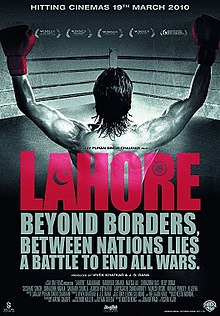
LAHORE (2010)
Summary:
Lahore is a gripping Indian sports drama film released in 2010, directed by Sanjay Puran Singh Chauhan. The narrative centers on Dheerendra Singh, a talented long jumper whose life takes a drastic turn after his elder brother, Inder Singh, a promising kickboxer, dies under suspicious circumstances during an international match in Lahore, Pakistan. Consumed by grief and a burning desire for revenge and truth, Dheerendra abandons his own sport to step into the kickboxing ring, determined to confront the Pakistani opponent, Noor Mohammad, who was in the ring with Inder during his fatal collapse.
The film delves deep into themes of sportsmanship, nationalism, personal loss, and cross-border relations, portraying Dheerendra's arduous journey from a novice fighter to a formidable contender. It explores the complexities of political tensions influencing sports, the media's role in shaping public opinion, and the profound emotional toll of vengeance. As Dheerendra prepares for the ultimate showdown, he uncovers layers of conspiracy and humanizes his perceived enemy, ultimately seeking not just retribution but also understanding and reconciliation.
Keywords: Lahore, 2010, Sports Drama, Kickboxing, Revenge, India-Pakistan, Sanjay Puran Singh Chauhan, Farooq Shaikh, Sushant Singh, Anand Raj Anand.
Plot:
The story of Lahore begins by introducing the Singh brothers, Inder and Dheerendra, who hail from a humble background in India but possess immense sporting talent. Inder, the elder brother, is a celebrated kickboxer, known for his agility and powerful kicks, representing India on the international stage. Dheerendra, on the other hand, is an aspiring long jumper, equally dedicated to his sport, with dreams of bringing glory to his nation. Their bond is strong, built on mutual respect and shared dreams, supported by their loving mother, Amma. The narrative quickly establishes the pressure and expectations that come with being an international athlete, especially when competing against rival nations, a sentiment particularly amplified in matches between India and Pakistan.
The inciting incident that shatters their world occurs during a high-stakes kickboxing match in Lahore, Pakistan, where Inder faces off against the formidable Pakistani champion, Noor Mohammad. The match is fiercely contested, with both fighters demonstrating exceptional skill and determination. However, in a shocking turn of events, Inder collapses in the ring during a crucial round, succumbing to his injuries shortly after. The circumstances surrounding his death are immediately controversial, with accusations of foul play and illegal moves being hurled, particularly by the Indian contingent and media. The incident ignites a media frenzy and fuels nationalist sentiments on both sides of the border, turning a tragic sporting event into a political flashpoint. The official cause of death is declared as a heart attack, but many, especially Dheerendra, refuse to accept this explanation, believing there was more to his brother's demise.
Devastated by Inder's untimely death and haunted by the images of his brother collapsing, Dheerendra's world crumbles. His long jump career, once his sole focus, now seems meaningless. He is consumed by an overwhelming sense of grief, anger, and a burning desire for vengeance. Convinced that Noor Mohammad and his team were responsible for Inder's death, Dheerendra makes a radical decision: he will abandon long jumping and take up kickboxing, vowing to avenge his brother by defeating Noor in the ring. This decision is met with skepticism and resistance from his mother and coaches, who fear for his safety and recognize the monumental challenge of switching disciplines and competing at an international level against a seasoned professional.
Despite the initial opposition, Dheerendra's unwavering resolve convinces his former coach, Kaka, and a seasoned but disillusioned boxing coach, Madhav Suri (portrayed by the late Farooq Shaikh), to train him. Madhav Suri, a man with a past marked by his own failures and regrets, sees a reflection of his younger self in Dheerendra's raw determination. He takes Dheerendra under his wing, subjecting him to a rigorous and brutal training regimen that pushes Dheerendra to his physical and mental limits. This training montage effectively conveys Dheerendra's transformation from a lean long jumper to a powerful kickboxer, highlighting the immense discipline, sacrifice, and pain involved in mastering a new combat sport. His training is not just about physical prowess; it's also about mental fortitude, learning to control his anger, and channeling his grief into focused aggression.
As Dheerendra progresses, the narrative introduces the political and bureaucratic hurdles involved in arranging another India-Pakistan match. The incident involving Inder has strained relations, and various officials, including the Indian Sports Minister KK Goswami and Pakistani Sports Minister Anwar, are cautious about the potential repercussions. A young, idealistic Indian journalist named Ira, who is covering the story, becomes a crucial link in Dheerendra's journey, initially skeptical but eventually supportive of his quest. She helps him navigate the media landscape and provides him with insights into the broader political context, often challenging his simplistic view of revenge.
Dheerendra's journey to Lahore for the rematch is fraught with tension. Upon arrival, he encounters a mix of hostility and unexpected warmth from the Pakistani public. He also comes face-to-face with Noor Mohammad, the man he holds responsible for his brother's death. However, as he spends time in Lahore, interacting with locals and observing Noor, Dheerendra begins to question his preconceived notions. He learns about Noor's own struggles, his family, and the immense pressure he too faces as a national hero. Ira's investigative journalism also starts to uncover inconsistencies in the official report of Inder's death, hinting at a larger conspiracy that goes beyond a simple sporting accident.
The build-up to the final match is a psychological battle as much as a physical one. Both fighters are under intense scrutiny from media, politicians, and their respective nations. Dheerendra is constantly reminded of his brother's fate, while Noor carries the burden of being associated with a national tragedy. The film masterfully portrays the media's role in sensationalizing the event, fueling animosity, and often overshadowing the true spirit of sportsmanship. Madhav Suri, Dheerendra's coach, plays a vital role in keeping Dheerendra focused, reminding him that the goal is not just revenge but also to honor his brother's memory by fighting with integrity and skill.
The climax of the film is the highly anticipated rematch between Dheerendra and Noor Mohammad in Lahore. The atmosphere in the stadium is electric, charged with nationalistic fervor. The fight itself is depicted with raw intensity, showcasing the brutal nature of kickboxing. Both fighters exhibit incredible courage, skill, and resilience. As the match progresses, Dheerendra's initial desire for pure vengeance slowly transforms. He realizes that Noor is not just an enemy but a fellow athlete, caught in a similar web of circumstances. During the grueling rounds, flashbacks and internal monologues reveal Dheerendra's evolving understanding of the situation. He recalls his brother's words about sportsmanship and the true meaning of competition.
In a dramatic turn, during one of the breaks or perhaps after a particularly hard hit, Dheerendra experiences a moment of clarity. He realizes that the truth about Inder's death might lie beyond the ring. Simultaneously, Ira's investigation culminates, revealing that Inder's death was not due to Noor's actions but a pre-existing medical condition exacerbated by performance-enhancing drugs, possibly administered by a corrupt manager or doctor involved in a larger betting scandal. This revelation shifts the focus from personal revenge to uncovering the systemic corruption that cost Inder his life. Dheerendra, instead of aiming for a knockout driven by anger, chooses to fight with newfound purpose – to expose the truth and honor his brother's legacy of clean sports. The fight concludes not with a clear victor in terms of a knockout, but with Dheerendra making a powerful statement, perhaps by refusing to deliver a final, vengeful blow, or by a gesture of sportsmanship towards Noor, signifying his emotional victory over hatred. The film ends on a note of reconciliation and justice, as the conspiracy behind Inder's death is brought to light, and Dheerendra and Noor, once adversaries, find common ground in their shared experience and love for the sport, promoting a message of peace and understanding across borders.
Cast (Lead Roles):
- Anand Raj Anand as Dheerendra Singh
- Shraddha Das as Ira
- Mukesh Rishi as Noor Mohammad
- Sushant Singh as Kaka
- Farooq Shaikh as Madhav Suri
- Kelly Dorji as Jeetendra Singh
- Nafisa Ali as Amma (Dheerendra's mother)
- Ashish Vidyarthi as Anwar
- Arunoday Singh as Inder Singh
- Sabyasachi Chakrabarty as KK Goswami
- Saurabh Shukla as Rajveer Singh
Crew:
- Director: Sanjay Puran Singh Chauhan
- Producer: Vivek Khatkar
- Screenplay: Sanjay Puran Singh Chauhan
- Story: Sanjay Puran Singh Chauhan
- Dialogue: Piyush Mishra
- Music Director: Wayne Sharpe, Vivek Khatkar
- Cinematography: Neelaabh Kaul
- Editor: P.S. Bharathi
Release Info:
- Original Release Date: January 29, 2010
- Language: Hindi
- Genre: Sports Drama, Action
- Running Time: 130 minutes
- Accolades:
- National Film Award for Best Feature Film (Indira Gandhi Award for Best First Film of a Director)
- National Film Award for Best Supporting Actor (Farooq Shaikh)
- National Film Award for Best Art Direction (Gautam Sen)