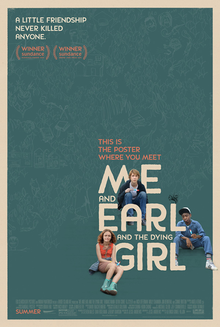



Discription
Seventeen-year-old Greg Gaines, a senior at Pittsburgh's Schenley High School, was a master of the art of detachment. He navigated the social labyrinth of high school with the grace of a seasoned hermit, preferring the company of his own thoughts and the flickering glow of his computer screen to the boisterous chaos of his peers.
His carefully constructed isolation was shattered when news reached him that Rachel Kushner, a former childhood friend, had been diagnosed with leukemia. Duty, disguised as parental pressure, compelled Greg to reach out, a prospect that filled him with a mixture of dread and a strange sense of unease.
Their initial encounter was a disaster. Confined to her room, Rachel, pale and listless, radiated an aura of quiet desperation. Greg, awkward and tongue-tied, stumbled over his words, desperately searching for common ground. Then, he noticed it – a mountain of pillows, each more eccentric than the last. A conversation, unexpected and surprisingly genuine, blossomed from this unlikely topic, revealing a quirky, insightful girl beneath the shadow of illness.
Soon, Greg found himself drawn into Rachel's world. He introduced her to Earl, his eccentric filmmaking partner, a whirlwind of energy and unconventional wisdom. Earl, with his signature bluntness, informed Rachel that Greg "avoids the 'F' word" – friend – out of a deep-seated fear of emotional vulnerability. Despite this, Rachel found herself drawn to Earl's raw honesty and the unique brand of humor that permeated their short films, each a satirical homage to a classic movie.
As Rachel began her grueling chemotherapy treatments, losing her hair in the process, Greg found himself spending less time on schoolwork and more time with her, his initial reluctance replaced by a genuine concern. He entertained her with stories, silly voices, and impromptu film screenings, determined to lift her spirits. Though Rachel's condition fluctuated, often taking a turn for the worse, Greg, ever the pragmatist, assured himself and, by extension, the viewer, that she would ultimately prevail.
Inspired by Rachel's indomitable spirit, Madison, the most popular girl in school, convinced Greg and Earl to create a film dedicated to her. Rachel, in turn, encouraged Greg to apply to a prestigious local college, a daunting prospect for a student who had consistently prioritized his own eccentric pursuits over academic achievement.
However, as Rachel's treatment progressed, Greg found himself increasingly consumed by the filmmaking project. Schoolwork became an afterthought, eventually fading into complete oblivion. His focus narrowed, consumed by the need to capture Rachel's spirit, her humor, her resilience, on film.
Tragedy struck when Rachel, recognizing the toll the aggressive chemotherapy was taking on her body, made the difficult decision to discontinue treatment. A heated argument ensued, with Greg accusing Rachel of giving up, of choosing despair over hope. Rachel, in turn, lashed out, accusing him of selfishness, of only acting out of a sense of obligation, never truly understanding the depth of her suffering.
Devastated and guilt-ridden, Greg retreated, his friendship with Rachel shattered. He turned his anger on Earl, blaming him for the unraveling of his life. Earl, weary of Greg's self-absorption, finally snapped, unleashing a torrent of pent-up frustration. He accused Greg of an inability to truly care for anyone beyond himself, culminating in a physical altercation. The aftermath left their friendship hanging by a thread, the once-vibrant partnership irrevocably damaged.
The repercussions of Greg's actions were swift and severe. His neglect of his studies resulted in the withdrawal of his college acceptance. He found himself adrift, his life spiraling out of control.
News of Rachel's deteriorating condition reached him. His mother, with a gentle nudge, urged him to visit. Torn between guilt and a fear of facing his own inadequacies, he almost chose to attend the prom with Madison. But at the last minute, he changed his mind, the weight of his guilt finally outweighing the allure of social acceptance.
As he rode in the limousine, the chauffeur's simple question – "Does she love you?" – left him speechless. He arrived at the hospital, clutching his iPhone and a small projector. He placed a single, delicate corsage on Rachel's wrist, a silent apology for his past failures.
Then, he projected the film onto the wall of her room. Rachel, her face pale but her eyes sparkling with a mischievous glint, watched with rapt attention. Tears streamed down her face as she witnessed the love and laughter captured on screen.
Shortly after watching the film, Rachel slipped into a coma. Ten agonizing hours later, she passed away. Greg, who had so confidently assured himself that she would survive, was forced to confront the harsh reality of his own mortality and the fragility of life.
At Rachel's shiva, surrounded by grieving family and friends, Greg found solace in the unexpected comfort of Rachel's mother, who understood his grief and offered him a quiet understanding. Gradually, his friendship with Earl began to mend, the rift slowly healing.
During the funeral, Greg snuck into Rachel's room, a final act of defiance against the somber atmosphere. He found a small card tucked away in her bedside drawer. In her delicate handwriting, Rachel had written to the college, explaining Greg's absence and pleading his case. The card also contained a simple instruction: "Take whatever you want."
As he searched her belongings, he discovered a series of intricate carvings hidden within the pages of her favorite books, each depicting scenes of their shared experiences – their first awkward encounter, the filmmaking sessions with Earl, moments of laughter and shared joy.
He chose one of the books, the carvings within a poignant testament to their unique bond. He also took his favorite of Rachel's pillows, a whimsical creation that always brought a smile to her face.
Weeks later, Greg, fueled by a newfound sense of purpose, wrote a letter to the college, accompanying it with the film he had made for Rachel. He added a final, chilling note: "The last person who saw this immediately went into a coma and DIED."
The letter and the film, a poignant reminder of the fragility of life and the enduring power of human connection, served as a testament to the profound impact Rachel had on his life, a bittersweet reminder of the girl who had forced him to confront his fears, to embrace vulnerability, and to discover the depths of his own compassion.