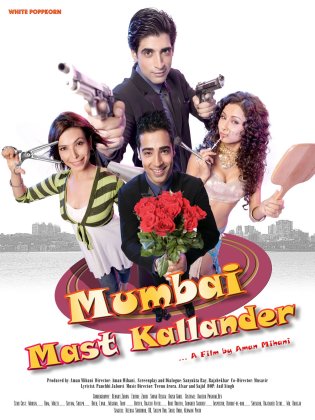



Discription
MUMBAI MAST KALLANDER (2011)
Summary:
Mumbai Mast Kallander is a heartwarming and poignant drama that chronicles the journey of Raju, a young man from a small village who arrives in the bustling metropolis of Mumbai with nothing but dreams and an indomitable spirit. Faced with the harsh realities of city life, poverty, and exploitation, Raju refuses to let his optimism waver. He embodies the 'Mast Kallander' – a free-spirited, joyful wanderer who finds beauty and hope amidst adversity, touching the lives of those around him with his unique charm and resilience.
The film explores themes of ambition, community, and the search for identity in a city that constantly tests one's limits. Through Raju's struggles and triumphs, it paints a vivid picture of Mumbai's vibrant street life, its challenges, and the unwavering spirit of its inhabitants. It's a story of finding one's voice, standing up against injustice, and building a chosen family in the sprawling urban landscape, culminating in a powerful message about hope and human connection.
Keywords: Mumbai Mast Kallander, 2011, Drama, Social Drama, Slice of Life, Resilience, Mumbai, Optimism.
Plot:
The film opens with Raju, a wide-eyed young man from a remote village in Maharashtra, stepping off a crowded train into the chaotic embrace of Mumbai. His pockets are empty, but his heart is full of aspirations – not of becoming a star, but simply of earning an honest living and sending money back to his ailing mother. The initial days are brutal; he sleeps on pavements, struggles for scraps of food, and faces the indifference of a city perpetually in motion. He tries his hand at various odd jobs – a coolie, a dishwasher, a delivery boy – but each venture is short-lived, either due to exploitation or the sheer competitiveness of the market. Despite the crushing reality, Raju maintains a peculiar sense of joy and an infectious optimism, often humming old folk tunes or narrating whimsical stories to himself, a habit that earns him the affectionate nickname "Kallander" from the other street dwellers.
During one of his desperate searches for work, Raju encounters Priya, a spirited young woman who runs a small, struggling tea stall near a bustling railway station. Priya, though hardened by her own struggles, is initially wary of Raju's seemingly naive optimism. However, she soon witnesses his genuine kindness and resilience. Raju begins to help Priya at her stall, not for money, but for a shared meal and a sense of belonging. It is here that Raju discovers his unique talent: storytelling. While serving tea, he spontaneously weaves captivating tales of ancient kings, brave heroes, and everyday miracles, drawing small crowds of weary commuters and curious passersby. His stories, imbued with humor, wisdom, and a touch of melancholy, become a brief respite from the daily grind for many.
Raju's storytelling sessions at Priya's stall slowly gain traction. People start coming specifically to hear "Kallander's Kisse" (Kallander's Tales). His modest earnings begin to grow, enough to rent a tiny room in a chawl and contribute meaningfully to Priya's struggling business. Their bond deepens, evolving into a quiet, supportive companionship that hints at a budding romance. They share dreams and fears, finding solace in each other's presence. However, their newfound stability attracts unwanted attention. Bhau, a local strongman and loan shark who controls the informal economy of the area, sees Raju's growing popularity and Priya's improving business as an opportunity for exploitation. Bhau and his goons begin to demand protection money, threatening to shut down Priya's stall and disrupt Raju's storytelling if they refuse.
Raju, initially hesitant to confront Bhau, tries to negotiate, appealing to his sense of reason, but Bhau is unmoved, driven only by greed and power. Priya, having faced such extortion before, urges Raju to comply, fearing for their safety and livelihoods. However, Raju's "Kallander" spirit refuses to bend. He sees Bhau's demands not just as a financial burden, but as an assault on the freedom and joy he brings to the community. He realizes that giving in would mean surrendering his spirit. Inspired by the courage he narrates in his own stories, Raju decides to fight back, not with violence, but with the very tool that brought him recognition: his voice and the support of the community he has unwittingly built.
The climax unfolds during a major local festival, where Raju is scheduled to perform for a larger audience than ever before. Bhau arrives with his men, intending to publicly humiliate Raju and reassert his dominance. He tries to disrupt the performance, threatening the audience and demanding that Raju stop. However, Raju, with Priya's unwavering support by his side, doesn't falter. Instead of a typical story, he begins to narrate a powerful, allegorical tale about a small, vibrant community being oppressed by a dark shadow, subtly mirroring Bhau's actions. He weaves in the struggles of the common people, their dreams, and their right to live with dignity. His words resonate deeply with the gathered crowd, many of whom have also suffered under Bhau's tyranny. The audience, empowered by Raju's courage and the collective understanding of his message, begins to stand up, refusing to be intimidated by Bhau's threats.
Overwhelmed by the unexpected unity and defiance of the crowd, and facing the risk of public exposure and humiliation, Bhau's authority crumbles. His goons, sensing the shift in power and the public sentiment turning against them, slowly retreat. Bhau, defeated not by force but by the power of truth and community, is left isolated and powerless. In the aftermath, Raju and Priya's stall becomes a symbol of resilience and hope. Raju continues his storytelling, but now with an even greater sense of purpose, using his art to uplift and unite. The film concludes with Raju, Priya, and their community thriving, having carved out a space of dignity and joy in the heart of Mumbai. Raju, the "Mast Kallander," has not only found his place but has also inspired others to find theirs, proving that even in the largest, most challenging cities, the human spirit, when nurtured by kindness and courage, can truly flourish.
Cast (Lead Roles):
- Mohsin Khan as Raju "Kallander"
- Priya Sharma as Priya
- Rakesh Singh as Bhau
Crew:
- Director: Mohsin Khan
- Producer: Aarti Devi
- Writer: Mohsin Khan, Rajesh Kumar
- Music Director: Sameer Ali
- Cinematographer: Alok Verma
- Editor: Suman Das
Release Info:
- Original Release Date: May 13, 2011
- Language: Hindi
- Genre: Drama, Social Drama, Slice of Life
- Running Time: 135 minutes
- Accolades: Nominated for Best Debut Director (Mohsin Khan) at a regional film festival.