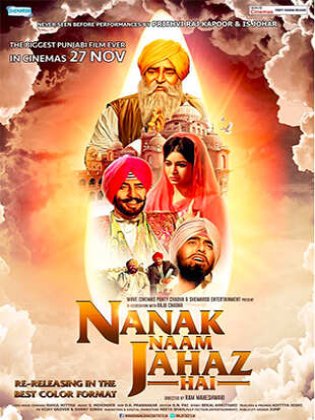


Discription
NANAK NAAM JAHAZ HAI (1969)
Summary:
Nanak Naam Jahaz Hai is a landmark 1969 Punjabi-language film directed by Ram Maheshwari. It stands as one of the most significant and culturally influential films in the history of Indian regional cinema, being the first Punjabi film to win a National Film Award. The story is a profound spiritual drama that explores themes of faith, betrayal, redemption, and the divine power of Guru Nanak’s teachings. Starring the legendary Prithviraj Kapoor in a powerful performance, the film follows a family torn apart by greed and deception, only to be reunited through a miraculous test of devotion. With a soul-stirring soundtrack featuring shabads (hymns) by renowned singers like Mohammad Rafi and Asha Bhosle, the film remains a timeless classic that continues to resonate with audiences globally. Keywords: Nanak Naam Jahaz Hai 1969, Prithviraj Kapoor Punjabi Movie, National Award Winning Punjabi Film, Spiritual Drama, Golden Temple Movie.
Plot:
The story of Nanak Naam Jahaz Hai is set in a small, traditional village in Punjab, where the values of faith and family are deeply intertwined with everyday life. The narrative centers on the life of Gurmukh Singh (Prithviraj Kapoor), a deeply pious and respected man who lives a life guided by the principles of Sikhism. Gurmukh Singh is a man of immense integrity and compassion, earning him the admiration of the entire community. He lives with his younger brother, Prem, and his family. The household is initially one of peace and prosperity, fueled by the honest labor and spiritual devotion of its members. However, the harmony of the home is threatened by the arrival of Gurmukh's brother-in-law, Shuka (I.S. Johar), a man driven by greed, cunning, and a complete lack of moral grounding. Shuka begins to plant seeds of discord within the family, manipulating the emotions and insecurities of those around him to gain control over the family's assets and business.
The conflict escalates when Shuka succeeds in creating a massive rift between Gurmukh Singh and Prem. Through a series of elaborate deceptions and false accusations, Shuka convinces Prem that Gurmukh is working against his interests. The tragedy strikes when a fire breaks out at their shared business premises—a disaster secretly orchestrated by Shuka to ruin Gurmukh. In the chaos of the fire, Prem loses his eyesight, a devastating blow that leaves him vulnerable and dependent. Shuka uses this tragedy to further isolate Gurmukh Singh, painting him as the culprit responsible for Prem’s blindness and the family's financial ruin. Gurmukh Singh, though heartbroken by the betrayal and the suffering of his brother, refuses to abandon his faith. He accepts his trials as the will of the Almighty, maintaining his dignity even as he is cast out of his own home and separated from the family he loves.
As the years pass, Gurmukh Singh lives a life of quiet devotion, constantly praying for his brother's well-being and the restoration of his sight. Meanwhile, Prem, living under the manipulative thumb of Shuka, becomes increasingly bitter and despondent. The once-thriving family business is drained by Shuka’s greed, leaving Prem and his wife in a state of growing poverty and despair. The narrative shifts toward a spiritual quest when Gurmukh Singh, guided by a divine calling, suggests that Prem undertake a pilgrimage to the holy Golden Temple (Harmandir Sahib) in Amritsar. He believes that true devotion and the blessings of the Guru can achieve what medical science and human effort could not. Despite Shuka’s mockery and attempts to discourage them, Prem’s wife, driven by a glimmer of hope and unshakable faith, manages to convince Prem to embark on the arduous journey.
The pilgrimage serves as the spiritual heart of the film. The journey to Amritsar is depicted not just as a physical travel across the landscape of Punjab, but as an internal journey toward spiritual awakening. Along the way, the characters encounter various trials that test their resolve and their faith. Gurmukh Singh, though keeping a distance to avoid causing further conflict, follows them, providing silent protection and constant prayer. The atmosphere of the film becomes increasingly ethereal as they reach the Golden Temple. The cinematic portrayal of the shrine, accompanied by the hauntingly beautiful shabads, creates a sense of divine presence. Prem, guided to the edge of the sacred Sarovar (pool), undergoes a transformation. His bitterness begins to melt away, replaced by a profound sense of surrender to the Guru’s will.
The climax of the film occurs during a momentous prayer at the Golden Temple. In a sequence that is both visually and emotionally overwhelming, the power of collective faith and the divine intervention of the Guru are invoked. As the shabad "Nanak Naam Jahaz Hai" echoes through the complex, a miracle unfolds. Prem’s sight is restored in a moment of blinding light and spiritual ecstasy. This miraculous event serves as the ultimate validation of Gurmukh Singh’s unwavering faith and the vanity of Shuka’s worldly cunning. The news of the miracle spreads like wildfire, bringing the family face-to-face in a moment of tearful reconciliation. The deceptions of Shuka are finally exposed, and he is forced to confront the magnitude of his sins, leading to his eventual downfall and social ostracism.
The final act of the film focuses on the restoration of the family unit and the triumph of spiritual values over material greed. Gurmukh Singh and Prem are reunited in a powerful embrace, their bond stronger than ever before. The film concludes with a grand celebration of faith, emphasizing that while the journey of life is fraught with storms and deceptions, the "Name of Nanak" is the ship that carries the faithful safely across the ocean of existence. The movie leaves the audience with a powerful message of hope and the belief that no matter how dark the circumstances, the light of truth and devotion will always prevail. It is a cinematic masterpiece that transcends its era, serving as a spiritual guide and a reminder of the enduring power of the Guru’s grace in the lives of the devoted.
Cast:
-
Prithviraj Kapoor as Gurmukh Singh
-
I.S. Johar as Shuka (The Antagonist)
-
Vimi as Channi
-
Som Dutt as Prem (Gurmukh's Brother)
-
David Abraham as The Doctor
-
Nishi as Prem's Wife
-
Suresh as Special Appearance
-
Veena as Gurmukh's Wife
Crew:
-
Director: Ram Maheshwari
-
Producer: Pannalal Maheshwari
-
Writer: Ram Maheshwari (Screenplay), Rajinder Singh Bedi (Dialogues)
-
Music Director: S. Mohinder
-
Lyrics: Traditional (Shabads), Prem Dhawan
-
Singers: Mohammad Rafi, Asha Bhosle, Manna Dey, Mahendra Kapoor
-
Cinematographer: Dharam Chopra
-
Editor: S.R. Sawant
Release Info:
-
Original Release Date: 1969
-
Language: Punjabi
-
Genre: Spiritual / Family Drama
-
Accolades: Won the National Film Award for Best Feature Film in Punjabi and Best Music Direction.
-
Running Time: 2 Hours 30 Minutes (Approx)