

Discription
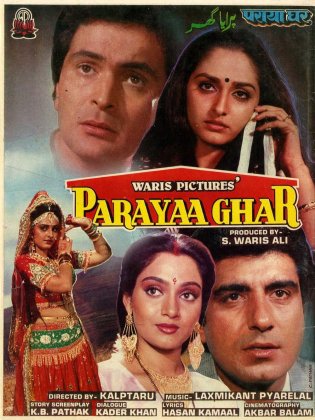
PARAYA GHAR (1989)
Summary:
Paraya Ghar is a poignant Hindi family drama from 1989, directed and produced by H.K. Lall, that delves into the complexities of marital life, family dynamics, and the harsh realities of economic struggle. The film centers on the young, idealistic couple Ravi and Aarti, whose love is tested by financial hardship, the expectations of a joint family system, and the manipulative schemes of those around them. It explores how a loving relationship can be strained under pressure, forcing individuals to make difficult choices and profound sacrifices for the sake of their loved ones and the preservation of family honor.
The narrative meticulously portrays the everyday challenges faced by a middle-class family in India, emphasizing the importance of unity, understanding, and resilience. As Ravi navigates unemployment and Aarti strives to maintain harmony within the household, the film examines themes of selflessness, the corrosive nature of greed, and the ultimate triumph of enduring human spirit and familial bonds over adversity. It's a tale that resonates with anyone who has faced the trials of building a life together while upholding traditional values amidst modern-day pressures.
Keywords: Paraya Ghar, 1989, Rishi Kapoor, Jayaprada, Family Drama, Hindi Cinema, Financial Struggle, Sacrifice.
Plot:
The story of Paraya Ghar opens by introducing Ravi (Rishi Kapoor), a young man from a respectable, albeit financially struggling, middle-class family. He is deeply in love with Aarti (Jayaprada), a beautiful and virtuous woman. Their love story blossoms against the backdrop of societal expectations and the unspoken desire for stability. Ravi, despite his good intentions and education, finds himself unemployed, a common predicament that adds a layer of anxiety to his otherwise hopeful disposition. Aarti, on the other hand, comes from a family that values honor and simplicity, and she sees beyond Ravi's immediate financial standing, drawn to his sincerity and kind heart. Their courtship is marked by sweet, innocent moments, promising a future built on mutual affection and understanding. However, the shadow of economic uncertainty looms large over their impending union, a concern subtly voiced by their respective families, though their love ultimately triumphs over these initial reservations, leading to their marriage.
Post-marriage, the initial glow of newlywed bliss soon gives way to the harsh realities of a joint family household and Ravi’s continued unemployment. Aarti, despite being new to the household, quickly adapts to her role as a dutiful daughter-in-law, managing the domestic chores with grace and trying her best to support her husband emotionally. Ravi’s father (Om Shivpuri) is a man of traditional values, constantly worried about the family’s dwindling resources and the future of his children. His mother (Shubha Khote) is a loving matriarch, but also burdened by the daily struggles. Ravi’s elder brother, a character often portrayed as more practical or even cynical, adds another dynamic to the family, sometimes offering unsolicited advice or expressing frustrations that further highlight Ravi’s predicament.
The financial strain becomes a constant source of tension. Ravi, desperate to provide for his family and wife, embarks on a relentless search for work, facing numerous rejections and disappointments. Each setback chips away at his self-esteem, making him feel increasingly inadequate. Aarti, witnessing her husband's struggle, decides to contribute financially, a decision that is met with mixed reactions within the conservative family. She might take up tailoring, teaching, or some other home-based work, showcasing her resilience and determination. Her efforts, while providing some relief, also underscore the depth of their crisis and the sacrifices she is willing to make. This period is crucial in establishing Aarti as a strong, independent woman who is not afraid to challenge conventional norms for the well-being of her family.
The plot thickens with the introduction of antagonists or external forces that seek to exploit the family's vulnerability. This often comes in the form of a manipulative relative, a greedy landlord, or a business associate with ill intentions. For instance, Kader Khan often plays such roles, here possibly as a cunning businessman or a conniving relative who sees an opportunity to take advantage of the family's property or assets. He might offer Ravi a seemingly lucrative but ultimately deceitful business proposition, or try to create discord within the family by poisoning their minds against each other, particularly against Aarti, who is seen as an outsider. These external pressures exacerbate the internal conflicts, leading to misunderstandings and mistrust among family members.
A major turning point arises when a significant crisis hits the family. This could be a large debt, a threat to their ancestral home, or a medical emergency involving one of the elders. Ravi, desperate, might fall into the trap set by the antagonist, leading to further complications. Aarti, with her sharp intellect and unwavering moral compass, often becomes the one who sees through the deception. She might try to warn Ravi, but he, blinded by desperation and a desire to prove himself, might initially dismiss her concerns, leading to a temporary rift between them. This period is fraught with emotional turmoil, as Aarti feels isolated and Ravi struggles with his choices and their consequences.
As the situation deteriorates, the family faces the brink of ruin. The antagonist's schemes come to light, revealing his true malicious intent. This revelation often comes through the tireless efforts of Aarti, who gathers evidence or uncovers the truth through her own investigations. The family, initially fragmented by suspicion and despair, begins to realize the extent of the deception. Ravi, having faced the bitter consequences of his decisions, finally understands Aarti’s wisdom and unwavering support. This moment of realization is critical, as it signifies Ravi's growth and his renewed trust in his wife.
The climax involves a confrontation with the antagonist, where the family, now united, stands up against the injustice. This could involve a dramatic court case, a public exposure of the villain's misdeeds, or a direct confrontation where the family reclaims what was rightfully theirs. Aarti often plays a pivotal role in this resolution, using her intelligence and courage to turn the tide. The film emphasizes that true strength lies in unity and integrity, not in material wealth. The antagonist is ultimately defeated, facing the consequences of his actions, perhaps through legal means or public disgrace.
In the aftermath, the family, though having endured immense hardship, emerges stronger and more cohesive. Ravi finally secures a stable job, not through shortcuts, but through honest hard work and perseverance, reflecting his journey of self-discovery and maturity. Aarti is fully accepted and revered within the family, her sacrifices and wisdom acknowledged and appreciated. The film concludes on a hopeful note, celebrating the resilience of the human spirit, the enduring power of love, and the sanctity of family bonds. It reinforces the message that while external forces can create temporary discord, the foundation of a strong family, built on love, trust, and mutual respect, can overcome any adversity, making "Paraya Ghar" (meaning 'Stranger's Home' or 'Other's Home') a testament to turning an unfamiliar place into one's own cherished sanctuary through love and sacrifice.
Cast (Lead Roles):
- Rishi Kapoor as Ravi
- Jayaprada as Aarti
- Kader Khan as The Antagonist (likely a manipulative relative or businessman)
- Aruna Irani as Supporting Character (possibly a family friend or another antagonist)
- Shafi Inamdar as Supporting Character (possibly a family member or Ravi's friend)
- Saeed Jaffrey as Supporting Character (possibly a wise elder or Ravi's father's friend)
- Om Shivpuri as Ravi's Father
- Asrani as Supporting Character (often for comic relief or a minor role)
- Shubha Khote as Ravi's Mother
Crew:
- Director: H.K. Lall
- Producer: H.K. Lall
- Music: R.D. Burman
- Lyrics: Anand Bakshi
- Story: H.K. Lall
- Screenplay: H.K. Lall
- Dialogue: Kader Khan
Release Info:
- Original Release Date: 1989
- Language: Hindi
- Genre: Drama, Family
- Running Time: Approximately 145 minutes
- Accolades: Specific major awards are not widely documented for this film, but it is remembered as a typical family drama of its era, appreciated for its emotional depth and performances.