

Discription
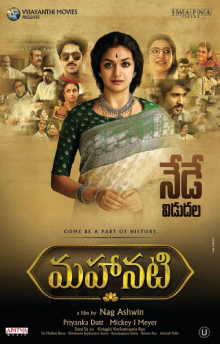
The year is 1980. In the bustling city of Bangalore, a hush falls over the film industry as news spreads: Savitri, the legendary actress, has been found unconscious in her son's apartment. The once-radiant star, whose name was synonymous with grace and glamour, now lay in a hospital bed, battling for her life. The media descended upon the hospital, eager for any news, while the public, captivated by the dramatic turn of events, speculated wildly about the actress's mysterious past.
Two journalists were assigned the daunting task of piecing together Savitri's life: Madhuravani, a young, ambitious reporter grappling with a debilitating stutter, and Vijay Anthony, a seasoned photographer with a keen eye for detail. Their brief: to write a comprehensive article on the actress's life and career.
As Madhuravani delved into the archives, she stumbled upon a poignant letter penned by Savitri herself. In it, the actress expressed a desperate longing to take her son to someone named "Shankarayya." The letter, filled with a raw, unfiltered emotion, ignited a spark of curiosity within Madhuravani. Despite being relieved of her writing duties by her skeptical editor, she couldn't shake off the lingering questions.
Driven by an insatiable thirst for the truth, Madhuravani ventured into Savitri's secluded residence, hoping to unearth hidden facets of her life. There, she eavesdropped on a conversation between Savitri's aunt and a visiting friend, a conversation that offered a glimpse into the actress's humble beginnings.
The year is 1942. In the small town of Vijayawada, a young widow, Subadrama, and her daughter, Savitri, found solace in the home of Subadrama's sister, Durgamba, and her husband, KV Chowdary. While Durgamba welcomed her sister with open arms, Chowdary, a man of rigid principles and a conservative mindset, resented the added burden.
Despite facing initial indifference, Savitri blossomed in her new environment. Blessed with natural talent, she excelled in dance, captivating audiences with her mesmerizing performances. Her artistic pursuits proved to be a financial boon for Chowdary, as she earned substantial profits by acting in local plays alongside her close friend, Susheela.
However, the burgeoning film industry in Madras cast a long shadow over the thriving theatrical scene. As audiences flocked to the silver screen, the attendance at plays dwindled, leaving Chowdary with mounting financial losses. He saw an opportunity in the burgeoning film industry and, despite Savitri's young age and unfamiliarity with the Tamil language, he pushed her towards a career in cinema.
Fate intervened when Savitri met Ramasamy "Gemini" Ganesan, a handsome young studio employee who was tasked with photographing aspiring actors for a casting directory. Their paths crossed again a year later when Savitri was cast in a film directed by the renowned L.V. Prasad. Though her initial attempt at delivering dialogues proved disastrous, her captivating dance performance in the iconic film "Pathala Bhairavi" caught the attention of the industry.
Soon, Savitri was offered a leading role opposite Ganesan himself, who, recognizing her immense potential, patiently tutored her in the nuances of the Tamil language. Their on-screen chemistry was undeniable, and their meteoric rise to stardom was nothing short of spectacular.
However, their professional success was intertwined with a passionate, yet forbidden love affair. Savitri, captivated by Ganesan's charisma, fell deeply in love with the married actor. Their clandestine marriage, while fulfilling a deep-seated longing, brought with it a storm of disapproval from Savitri's family and the disapproving gaze of society.
Despite the initial resistance, Savitri continued to grace the silver screen, her talent shining through in every role. She gave birth to two children, a daughter and a son, and enjoyed a period of domestic bliss. But the idyllic facade soon crumbled. Ganesan, initially supportive of Savitri's career, began to feel threatened by her escalating fame. His insecurities manifested in alcoholism, and his attempts to control Savitri's life led to frequent clashes.
A group of progressive women, recognizing Savitri's talent and her desire for creative control, encouraged her to direct and star in a film featuring an entirely female cast and crew. This ambitious project, a testament to Savitri's pioneering spirit, was met with much anticipation. However, on the day of the film's release, Savitri discovered Ganesan in their guesthouse with another woman. The betrayal shattered her world, plunging her into a deep abyss of despair.
Devastated and heartbroken, Savitri turned to alcohol to numb the pain. Her personal life spiraled out of control, exacerbated by the untimely death of her mother and a series of ill-fated financial decisions that culminated in a raid by the Income Tax Department, leaving her destitute.
One fateful evening, a heated argument with her daughter over her excessive alcohol consumption led to a tragic accident. In a fit of rage, Savitri fainted, accidentally setting their house on fire. The incident served as a wake-up call. She was diagnosed with diabetes, a condition that further exacerbated her fragile health.
Driven by a newfound sense of purpose, Savitri sought redemption. She apologized to her daughter and her uncle, acknowledging her past mistakes. She embraced sobriety, embarked on a rigorous fitness regime, and shed the extra weight.
Determined to rebuild her life, Savitri shifted to a smaller residence, focused on raising her son, and accepted roles in low-budget films. She even set aside a portion of her meager earnings to establish a rehabilitation center for those struggling with addiction, a testament to her desire to help others overcome their demons.
However, the past continued to haunt her. The Income Tax Department continued to pursue her for outstanding dues, and Savitri, refusing to compromise her principles, staunchly refused to pay.
Desperate to escape the constant reminders of her past, Savitri decided to move to Bangalore with her son. But the city, once a symbol of hope and ambition, now felt suffocating. The memories of her triumphs and tragedies were deeply intertwined with every corner of the city.
In a moment of weakness, she reached out to Ganesan, only to hang up the phone before uttering a word. Anger, both at him and at herself, consumed her. She succumbed to the temptation of alcohol, the familiar burn offering a temporary escape from the pain.
The next morning, she was found unconscious, her life hanging by a thread. The news of her collapse sent shockwaves through the nation, bringing the curtain down on the life of a legendary actress.
Madhuravani, through the process of researching Savitri's life, underwent a profound transformation. The actress's story of resilience and redemption resonated deeply with her, allowing her to overcome her own personal demons.
One evening, while attending what she believed to be Anthony's engagement party, Madhuravani, fueled by a newfound confidence, spoke eloquently and fluently, much to everyone's surprise. She realized her mistake – it was his sister's engagement. To her astonishment, Anthony, who had been observing her with growing admiration, confessed his feelings for her.
Finally free from the shackles of her stutter, Madhuravani completed Savitri's memoir, a poignant tribute to the fallen star. She visited Savitri in the hospital, placing a faded photograph of her father, retrieved from a newspaper archive, in her frail hands.
Savitri, the enigmatic actress, breathed her last in December 1981, leaving behind a legacy that continues to inspire generations.
The mystery of "Shankarayya" was finally revealed. It wasn't a person, but a cherished childhood memory – a statue that Savitri, orphaned at a young age, had considered her father figure. The statue, a symbol of hope and solace, had remained a constant presence in her heart, a silent guardian throughout her tumultuous journey.
Savitri's life, a tapestry woven with threads of triumph and tragedy, serves as a poignant reminder of the ephemeral nature of fame and the enduring power of human spirit.