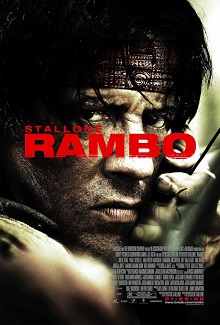



Discription
Rambo, often referred to as Rambo IV, is a 2008 action film directed by Sylvester Stallone, who also stars in his iconic role as John Rambo. Set nearly two decades after Rambo III, the film departs from the more fantastical elements of its predecessor and grounds itself in the brutal reality of the ongoing civil war in Myanmar (Burma). This installment presents a more mature, albeit still intensely violent, Rambo, grappling with his legacy as a warrior in a world consumed by conflict. The film is notable for its visceral action sequences, its unflinching portrayal of the atrocities committed against the Karen people, and its exploration of themes such as intervention, vengeance, and the enduring nature of violence.
Movie Summary
Living a solitary existence in Thailand, John Rambo is drawn back into his violent past when a group of idealistic missionaries seeking to provide aid to refugees in war-torn Myanmar are captured by the sadistic Burmese military. Initially reluctant, Rambo's sense of duty and compassion compels him to guide a team of mercenaries hired to rescue the aid workers. The ensuing mission becomes a descent into a brutal and unforgiving landscape, forcing Rambo to confront not only the savagery of his enemies but also the enduring nature of his own capacity for violence. This film is a raw and unflinching portrayal of the consequences of conflict, highlighting the resilience of the human spirit amidst unimaginable suffering.
Plot Details
The film opens in present-day Thailand, where John Rambo has carved out a desolate existence as a snake catcher and boatman. He resides in a remote village, seemingly detached from the world and the violence that defined his past. He's a man marked by time and trauma, his weathered appearance reflecting the battles he's fought both externally and internally. This tranquility is shattered by the arrival of a group of missionaries, led by the compassionate Sarah Miller and the determined Michael Burnett. They seek Rambo's assistance in navigating the treacherous Salween River to deliver much-needed medical supplies to Karen refugees in Myanmar.
Myanmar, the film establishes, is in the grip of a brutal civil war. The Karen people, an ethnic minority, are subjected to horrific oppression by the ruling military junta, led by the ruthless Major Pa Tee Tint. The film depicts the conflict as a desperate struggle for survival, marked by systematic violence, displacement, and a complete disregard for human rights. Rambo is initially resistant to their pleas. He voices a deep-seated cynicism, arguing that any attempt to help will only result in more bloodshed. He expresses a belief that the world is beyond saving and that detachment is the only form of self-preservation.
However, Sarah's unwavering conviction and the missionaries' genuine desire to alleviate suffering gradually chip away at Rambo's hardened exterior. He witnesses their courage and their commitment to helping others despite the inherent risks. Reluctantly, he agrees to transport them, and the journey upriver exposes him to the brutal reality of the conflict. He sees the devastation wrought by the Burmese military, the suffering of the refugees, and the pervasive atmosphere of fear and despair. These experiences begin to reawaken his dormant sense of justice and compassion.
The missionaries successfully deliver their aid and return to Thailand, but their idealism compels them to return to Myanmar to provide further assistance. Rambo warns them against this decision, sensing the impending danger, but they are determined to continue their work. This decision proves tragically fateful, as they are captured by Major Pa Tee Tint and his forces. The capture of the missionaries marks a turning point in the film, transforming it from a story about reluctant assistance into a full-blown rescue mission.
News of their capture reaches their church community, who, desperate to save them, hire a group of mercenaries. Led by a pragmatic and skilled soldier named Lewis, the mercenaries are a diverse team, each with their own specialized skills and motivations. They seek out Rambo, recognizing his unparalleled knowledge of the region, his survival expertise, and his legendary combat prowess. They understand that he is their only hope of navigating the dangerous terrain and rescuing the hostages.
Rambo is once again confronted with a choice: remain on the sidelines or embrace his violent nature to save innocent lives. He is torn between his desire for isolation and his inability to ignore the plight of those in need. Ultimately, he chooses to lead the rescue mission, driven by a complex mix of guilt, responsibility, and a rekindled sense of purpose. This decision marks his transformation from a recluse into a warrior once more.
The journey to the prisoner camp is a harrowing one. Rambo guides the mercenaries through treacherous terrain, evading enemy patrols and utilizing his intimate knowledge of the jungle to their advantage. These sequences highlight his exceptional survival skills and his ability to operate effectively in hostile environments. The film emphasizes the physical and psychological challenges of navigating a war zone, where danger lurks at every turn.
As they approach their destination, the film depicts the atrocities committed by the Burmese military in graphic detail. The prisoners are subjected to torture, and the film portrays scenes of mass executions and other brutal acts. These sequences are disturbing and unflinching, intended to expose the barbarity of the regime and to underscore the urgency of the rescue mission. They serve as a stark reminder of the real-world horrors that Rambo is fighting against.
The rescue mission culminates in a violent and intense assault on the prisoner camp. Rambo and the mercenaries unleash their combined combat skills, employing a range of weaponry and tactics to overcome the heavily armed Burmese soldiers. The action sequences are visceral and brutal, characterized by close-quarters combat, explosive firepower, and a high body count. The film does not shy away from depicting the consequences of violence, emphasizing the physical and emotional toll it takes on all involved.
Rambo's actions during the rescue are driven by a combination of tactical precision and primal rage. He is a force of nature, his movements fluid and deadly, his determination unwavering. He is not merely fighting to rescue the hostages; he is also seeking to punish those responsible for the atrocities and to deliver a measure of justice to the oppressed.
The film builds to a final confrontation between Rambo and Major Pa Tee Tint. This showdown is a brutal and personal one, a clash between two opposing forces. Rambo's victory is not only a military triumph but also a symbolic one, representing a triumph over evil and oppression.
Rambo (2008) concludes with the successful rescue of the missionaries, but the film offers no easy resolution. The conflict in Myanmar continues, and the suffering of the Karen people persists. Rambo, having confronted his past and rediscovered a sense of purpose, returns to the United States. The ending suggests a possibility of him finding a measure of peace, but it also acknowledges the enduring nature of violence and the long shadow it casts.
Cast
-
Sylvester Stallone as John Rambo
-
Julie Benz as Sarah Miller
-
Matthew Marsden as School Boy
-
Justin Chon as En-Joo
-
Sai Mawng as Tint
-
Maung Maung Khin as Major Pa Tee Tint
-
Tim Kang as En