


Discription
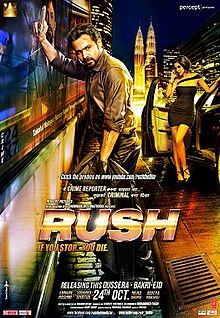
RUSH (2012)
Summary:
Rush is a biographical sports drama that vividly chronicles the exhilarating and perilous golden age of 1970s Formula 1 racing, focusing on the intense rivalry between two legendary drivers: the charismatic British playboy James Hunt and the disciplined Austrian perfectionist Niki Lauda. The film explores their contrasting personalities, racing philosophies, and personal lives, culminating in the dramatic 1976 Formula 1 season where their fierce competition pushed both men to the limits of human endurance and courage.
Through breathtaking race sequences and intimate character studies, Rush delves into the high stakes of a sport where every race could be a matter of life and death, highlighting the profound respect that ultimately developed between these two extraordinary adversaries. It’s a compelling narrative of ambition, sacrifice, and the relentless pursuit of greatness against the backdrop of one of motorsport's most iconic eras.
Keywords: Rush, 2012, Chris Hemsworth, Daniel Brühl, Ron Howard, Sports Drama, Biographical, Formula 1, James Hunt, Niki Lauda.
Plot:
The film opens in 1976, setting the stage for the climactic season, before flashing back to 1970 to introduce the two central figures. James Hunt, a flamboyant, devil-may-care British driver, is first seen competing in a Formula 3 race, exhibiting raw talent and an aggressive, fearless driving style that often leads to crashes. His passion for racing is matched only by his hedonistic lifestyle, characterized by drinking, partying, and womanizing. At the same race, Niki Lauda, a meticulous, analytical Austrian, makes his presence known. Lauda, an aristocratic outsider, is financially backed by his family's wealth, which he defied to pursue racing. He is precise, calculating, and utterly dedicated to the technical aspects of his car, often clashing with mechanics and team managers over his demands for perfection. Their first encounter on the track results in a collision, igniting an immediate and intense rivalry born from their diametrically opposed approaches to life and racing.
As their careers progress, both drivers ascend to Formula 1. Lauda, after buying his way into BRM, eventually joins Ferrari, a legendary team he systematically transforms into a winning machine through his relentless pursuit of technical excellence and discipline. He marries Marlene Knaus, a woman who understands and supports his intense focus. Hunt, meanwhile, struggles to secure a consistent seat, his talent often overshadowed by his erratic behavior and lack of sponsorship. He eventually finds a home with the eccentric Hesketh Racing team, a small, independent operation that shares his unconventional spirit. Hunt also marries, to the supermodel Suzy Miller, though their relationship is volatile and strained by his lifestyle. The film meticulously builds the tension of their rivalry, showcasing several races where they push each other to the absolute limit, each victory or defeat fueling the other's ambition. Lauda's methodical approach begins to yield consistent results, establishing him as a dominant force, while Hunt's bursts of brilliance keep him in contention, though often with less consistency.
The narrative then shifts to the pivotal 1976 Formula 1 season. Lauda, now a two-time world champion and driving for Ferrari, is the reigning champion and the clear favorite. He starts the season with a commanding lead, winning several races and building a substantial points advantage. Hunt, having moved to the McLaren team after Hesketh’s withdrawal, is determined to challenge Lauda, but mechanical issues and his own temperament initially hinder his progress. The rivalry reaches a fever pitch as the season progresses, with Hunt winning the Spanish Grand Prix only to be disqualified for a technicality, then reinstated after an appeal, further intensifying the psychological warfare between the two. The turning point of the season, and indeed the film, arrives at the German Grand Prix at the notoriously dangerous Nürburgring Nordschleife, a track Lauda had openly criticized for its lack of safety. Despite his concerns, the race proceeds. On the second lap, Lauda's Ferrari suffers a suspension failure, sending it careening into a wall and erupting in flames. Trapped in the burning wreckage, he is pulled out by fellow drivers, his helmet having been torn off. He suffers severe burns to his face and head, and his lungs are severely damaged by inhaling toxic fumes, leading to a priest administering last rites.
The film graphically depicts Lauda's harrowing recovery in the hospital. Despite being given little chance of survival, Lauda's extraordinary willpower and determination push him through. He endures agonizing procedures to clear his lungs and painful skin grafts, all while watching news reports of Hunt's rising success. During Lauda's absence, Hunt capitalizes, winning races and closing the points gap. The pressure on Hunt is immense; he feels the weight of expectation and the moral implications of gaining ground while his rival fights for his life. Lauda, against all medical advice and with visible, raw wounds still healing, makes a miraculous return to racing just six weeks after his near-fatal accident at the Italian Grand Prix at Monza. His comeback is a testament to his unparalleled mental fortitude, though he is clearly in immense physical pain and struggles with the psychological trauma of the crash. His return sends shockwaves through the F1 community, inspiring some and unsettling others, particularly Hunt, who is now facing a rival who has stared death in the face and returned.
The championship battle culminates at the final race of the season, the Japanese Grand Prix at Fuji Speedway. The weather conditions are atrocious, with torrential rain creating dangerous spray and poor visibility. Lauda, ever the pragmatist, argues vehemently for the race to be postponed or cancelled, citing safety concerns. His arguments are initially dismissed by the race organizers, who are eager for the revenue from the live broadcast. As the race begins under perilous conditions, Lauda completes two laps, experiencing terrifying aquaplaning and remembering the agony of his Nürburgring crash. He makes the courageous and pragmatic decision to withdraw from the race, prioritizing his life over the championship. This decision leaves the door open for Hunt to win the title, but he must finish third or higher to secure enough points. Hunt, despite the extreme danger and the risk of a similar fate to Lauda, decides to continue racing, driven by his competitive spirit and the immense pressure from his team and sponsors. The race becomes a grueling test of nerve and skill, with cars spinning and crashing around him.
Hunt pushes his McLaren to its absolute limits through the treacherous conditions. The race is a frantic battle against the elements and his own car, which suffers a slow puncture in the closing laps. After a series of dramatic overtakes and near-misses, and believing he has lost positions due to a pit stop, Hunt crosses the finish line in third place. Initially, he is distraught, believing he has failed to secure the championship. However, his team quickly informs him that he has indeed finished in the crucial third position, enough to clinch the 1976 Formula 1 World Championship by a single point over Lauda. The immediate aftermath sees Hunt celebrating wildly, a culmination of his lifelong dream. The film then briefly shows Lauda watching the celebrations on television, a complex mix of emotions on his face – disappointment, but also a quiet understanding and perhaps a nascent respect for his rival's achievement. The final scenes depict a reflective Lauda and Hunt, years later, acknowledging the unique and profound impact they had on each other's lives and careers. Their rivalry, though often bitter, ultimately forged a bond of mutual respect, acknowledging that each pushed the other to achieve greatness they might not have reached alone. The film concludes by highlighting their enduring friendship and the tragic early death of James Hunt at 45, leaving Lauda to reflect on their shared history.
Cast (Lead Roles):
- Chris Hemsworth as James Hunt
- Daniel Brühl as Niki Lauda
- Olivia Wilde as Suzy Miller
- Alexandra Maria Lara as Marlene Lauda
- Pierfrancesco Favino as Clay Regazzoni
- Stephen Mangan as Alastair Caldwell
- Christian McKay as Lord Hesketh
- Julian Rhind-Tutt as Bubbles Horsley
- Jamie Sives as Gerry Birrell
Crew:
- Director: Ron Howard
- Writer: Peter Morgan
- Producers: Andrew Eaton, Eric Fellner, Brian Grazer, Ron Howard, Peter Morgan
- Cinematography: Anthony Dod Mantle
- Editor: Daniel P. Hanley, Mike Hill
- Music: Hans Zimmer
- Production Design: Mark Digby
- Costume Design: Julian Day
Release Info:
- Original Release Date: September 13, 2013 (United Kingdom)
- Language: English, German, Italian
- Genre: Biographical, Drama, Sport
- Running Time: 123 minutes
- Accolades: Nominated for two Golden Globe Awards (Best Motion Picture – Drama, Best Supporting Actor – Daniel Brühl); Nominated for four BAFTA Awards (Outstanding British Film, Best Supporting Actor – Daniel Brühl, Best Editing, Best Sound); Nominated for a Screen Actors Guild Award (Outstanding Performance by a Male Actor in a Supporting Role – Daniel Brühl).