


Discription
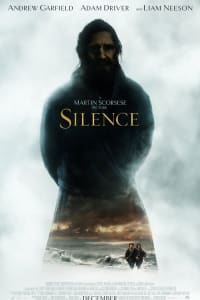
SILENCE (2016)
Summary:
Set in the 17th century, Martin Scorsese's "Silence" follows two young Portuguese Jesuit priests, Father Sebastião Rodrigues and Father Francisco Garupe, who travel to Japan to investigate reports that their revered mentor, Father Cristóvão Ferreira, has apostatized after being tortured. Upon their arrival in a land where Christianity has been outlawed and believers face brutal persecution, Rodrigues and Garupe witness unimaginable suffering and are forced to confront the limits of their faith, the nature of God's silence in the face of pain, and the profound cultural clash between Western religion and Japanese society.
As they minister to the hidden Christians and evade the relentless pursuit of the Inquisitor, the priests are subjected to a profound psychological and spiritual ordeal. Their journey becomes a harrowing exploration of sacrifice, betrayal, and the ultimate meaning of faith, culminating in a devastating choice that challenges the very core of their beliefs and the mission they set out to accomplish.
Keywords: Silence, 2016, Andrew Garfield, Adam Driver, Liam Neeson, Martin Scorsese, Drama, History, Religion, Persecution, Japan, Jesuit.
Plot:
The film opens in 1639 with Father Cristóvão Ferreira, a Portuguese Jesuit missionary, witnessing the horrific torture of Japanese Christians in Nagasaki. Years later, in 1640, at a Jesuit college in Macau, two of Ferreira's former students, Father Sebastião Rodrigues and Father Francisco Garupe, are presented with a letter from Japan. The letter, written by a Dutch trader, claims that Ferreira has renounced his faith and is now living as a Japanese man, having married and assimilated. Unwilling to believe their revered mentor could apostatize, Rodrigues and Garupe volunteer to travel to Japan to confirm the truth and, if possible, find and rescue Ferreira. They believe the letter is a fabrication designed to undermine the Christian mission.
Their perilous journey begins with the help of Kichijiro, a Japanese fisherman who had previously fled Japan and claims to be a Christian. Kichijiro guides them to a hidden Christian village near Tomogi, where they are welcomed by the villagers, who practice their faith in secret, risking their lives daily. Among them are the devout Mokichi and Ichizo, who serve as initial examples of profound faith and suffering. The priests are deeply moved by the villagers' unwavering devotion despite the constant threat of discovery and persecution by the Tokugawa shogunate, which views Christianity as a subversive foreign influence.
Their presence, however, inevitably draws the attention of the authorities. The local magistrate, known as the Inquisitor Inoue, soon discovers the village. To force the villagers to reveal the priests, he orchestrates a brutal public spectacle: four villagers, including Mokichi and Ichizo, are tied to crosses in the ocean, enduring the rising tide and waves for days until they drown or are beheaded. Rodrigues and Garupe are hidden by the remaining villagers, forced to watch the agonizing deaths from afar, their hearts torn between intervening and protecting the remaining community. This event marks a turning point, as the priests begin to grapple with the profound suffering of their flock and the perceived silence of God.
After the massacre, Rodrigues and Garupe decide to separate to minimize the risk to the villagers and increase their chances of survival. Garupe heads north, while Rodrigues continues to minister to smaller groups of hidden Christians. Rodrigues is eventually betrayed by Kichijiro, who, after repeatedly confessing his sins and asking for forgiveness, succumbs to his weakness and turns Rodrigues over to the authorities for a small bounty. Rodrigues is captured and brought to Nagasaki, where he is imprisoned and subjected to a series of theological debates and psychological torments by the cunning Inquisitor Inoue and his interpreter.
Inoue’s strategy is not to physically torture Rodrigues, but to break his spirit by forcing him to witness the suffering of others. Rodrigues watches as Japanese Christians are tortured in various horrific ways – hung upside down over a pit of excrement, burned, or drowned – all while being told that their torment will cease if Rodrigues, as their spiritual leader, apostatizes by stepping on the *fumie*, a sacred image of Christ or Mary. The Inquisitor argues that Christianity is a "sterile seed" that cannot take root in the "swamp" of Japan and that the priests' persistence only brings misery to their followers.
During his imprisonment, Rodrigues is shocked to finally meet Father Ferreira. Ferreira is no longer the man Rodrigues remembered; he is now living as a Japanese man, known as Sawano Chuan, working for the government, writing books against Christianity, and having a Japanese family. Ferreira explains that he apostatized to end the suffering of the Japanese Christians, arguing that the Japanese do not understand the core tenets of Christianity in the same way Westerners do, and that their God is not the same. He tells Rodrigues that the Japanese call their God "Dainichi," a Buddhist term, and that they cannot comprehend the Western concept of God.
The ultimate test of Rodrigues's faith comes when he is brought to a place where several hidden Christians are being tortured in the pit. He hears their groans and sees their agony. The Inquisitor and Ferreira press him to apostatize, explaining that his refusal prolongs their suffering. In a moment of intense internal struggle, Rodrigues hears what he perceives to be the voice of Christ telling him to "Tread on me." The voice assures him that Christ came into the world to be trampled upon, to bear the pain of others. With tears streaming down his face, Rodrigues steps on the *fumie*, a gesture of renunciation that saves the lives of the tortured Christians but shatters his own spiritual identity.
Following his apostasy, Rodrigues is given a Japanese name, Jojian, and forced to live under constant surveillance in Japan, much like Ferreira. He is made to serve the government by identifying smuggled Christian artifacts and inspecting *fumie* to ensure no hidden Christians are present. He marries a Japanese woman, has children, and is outwardly a Japanese citizen. However, the film frequently returns to Kichijiro, who, even after Rodrigues's apostasy, continues to seek out Rodrigues for confession, only to betray him again and again, embodying the weakness and humanity that Rodrigues himself has come to understand. Kichijiro is eventually captured and executed for his faith, highlighting the complex and often contradictory nature of belief.
Rodrigues lives out his days in Japan, ostensibly having abandoned his faith. Yet, the film suggests a deeper, more personal continuation of his belief. In the final scene, after his death, his body is cremated according to Japanese custom. As his wife places a small, hand-carved crucifix, given to him by a hidden Christian, into his hands before his cremation, the camera zooms in, revealing that he had kept his faith hidden within him all along. The film concludes with the profound ambiguity of Rodrigues's choice, leaving the audience to ponder whether his apostasy was a true renunciation or the ultimate act of Christ-like compassion and sacrifice, a silent testament to a faith that transcends outward expressions and societal pressures.
Cast (Lead Roles):
- Andrew Garfield as Father Sebastião Rodrigues
- Adam Driver as Father Francisco Garupe
- Liam Neeson as Father Cristóvão Ferreira
- Issey Ogata as Inquisitor Inoue Masashige
- Yōsuke Kubozuka as Kichijiro
- Tadanobu Asano as The Interpreter
- Shinya Tsukamoto as Mokichi
- Yoshi Oida as Ichizo
Crew:
- Director: Martin Scorsese
- Screenplay: Jay Cocks, Martin Scorsese
- Producers: Martin Scorsese, Emma Tillinger Koskoff, Irwin Winkler, Gastón Pavlovich, Randall Emmett, Barbara De Fina, Vittorio Cecchi Gori
- Cinematography: Rodrigo Prieto
- Editing: Thelma Schoonmaker
- Music: Kim Allen, Kathryn Kluge
Release Info:
- Original Release Date: December 23, 2016 (USA - limited); January 13, 2017 (USA - wide)
- Language: English, Japanese, Latin, Portuguese
- Genre: Drama, History
- Running Time: 161 minutes
- Accolades: Nominated for an Academy Award for Best Cinematography; numerous critical awards and nominations for direction, screenplay, and performances.