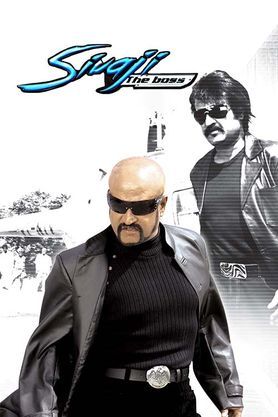


Discription
"Sivaji: The Boss" is a 2007 Indian Tamil-language action film directed by S. Shankar, featuring Rajinikanth in the lead role. The story revolves around Sivaji, a software systems architect, and his struggles against corruption and the societal challenges he faces. Here's a summary of the film in 1000 words:
The narrative begins with Sivaji Arumugham (Rajinikanth), a successful software systems architect, returning to India from the United States with a vision to contribute to society. He is enthusiastic about using his wealth for the betterment of the less privileged. Sivaji's philanthropic intentions clash with the corrupt system prevailing in the country, particularly the bureaucratic and political machinery.
Sivaji's attempt to establish a world-class university and hospital faces numerous hurdles due to corruption and red tape. The film introduces Adiseshan (Suman), a cunning and influential businessman who controls the political landscape. Sivaji's honesty becomes a threat to Adiseshan's interests, leading to a series of events that form the core of the plot.
In order to navigate the corrupt system, Sivaji decides to embrace a more pragmatic approach. He adopts the alias "M.G. Ravichandran" and uses unconventional methods to achieve his goals. Sivaji's transformation into a shrewd and resourceful individual highlights the systemic issues prevalent in society.
Sivaji falls in love with Tamizhselvi (Shriya Saran), a spirited young woman. Their love story adds a romantic element to the narrative, showcasing the challenges faced by Sivaji on both personal and societal fronts. The couple's chemistry adds emotional depth to the film, portraying Sivaji as not only a reformist but also a human being with desires and emotions.
As Sivaji continues his battle against corruption, he faces a personal setback when he is falsely accused of bribery and tax evasion. This leads to his arrest and the confiscation of his assets. Sivaji's imprisonment becomes a turning point, as he decides to fight back within the confines of the legal system.
The second half of the film unfolds with Sivaji's release from jail and his relentless pursuit of justice. He seeks the support of the common people, inspiring them to stand against corruption. The narrative builds tension as Sivaji confronts Adiseshan and challenges the corrupt establishment. The film features intense action sequences, showcasing Rajinikanth's trademark style.
To counter Sivaji's influence, Adiseshan employs cunning tactics and tries to manipulate public opinion against him. The clash between the two powerful personalities becomes a symbol of the larger struggle between good and evil, honesty and corruption. The film explores themes of justice, morality, and the impact of individual actions on society.
In the climax, Sivaji confronts Adiseshan in a high-stakes battle that goes beyond physical combat. The film's social commentary becomes more explicit as Sivaji questions the ethical foundations of the system. The climax serves as a cathartic resolution, with justice prevailing and the corrupt elements facing consequences for their actions.
The film concludes with Sivaji realizing his dream of establishing the university and hospital, symbolizing the triumph of good over evil. The narrative comes full circle as Sivaji's commitment to societal welfare prevails despite the numerous challenges he faced.
"Sivaji: The Boss" is not just a commercial entertainer but also a social commentary on corruption and the need for individual responsibility in bringing about change. Rajinikanth's charismatic performance, coupled with Shankar's direction and A. R. Rahman's music, makes the film a memorable and impactful cinematic experience.