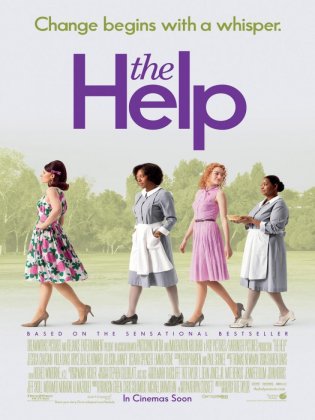



Discription
THE HELP (2011)
Summary:
Set in Jackson, Mississippi, during the tumultuous Civil Rights Movement of the early 1960s, "The Help" chronicles the unlikely friendship that develops between Eugenia "Skeeter" Phelan, an aspiring white writer, and two courageous black maids, Aibileen Clark and Minny Jackson. Skeeter returns home from college determined to pursue a career in journalism but is disheartened by the racial injustices prevalent in her community. She decides to write a book from the perspective of the black domestic workers, giving voice to their untold stories and experiences of working for white families.
The film explores themes of racial prejudice, social class, female solidarity, and the power of storytelling to ignite change. As Aibileen and Minny risk their livelihoods and safety to share their intimate and often painful narratives, their bravery inspires other maids to come forward. The resulting book, "The Help," becomes a powerful catalyst, exposing the hypocrisies and cruelties of the Jim Crow South and challenging the deeply entrenched racial divides, while also forging unbreakable bonds between the women involved.
Keywords: The Help, 2011, Emma Stone, Viola Davis, Octavia Spencer, Drama, Civil Rights, Mississippi.
Plot:
The story opens in Jackson, Mississippi, in 1963, a time of profound racial segregation and tension. Eugenia "Skeeter" Phelan, a recent college graduate with aspirations of becoming a writer, returns home to her family's cotton plantation. Unlike her debutante friends, Hilly Holbrook and Elizabeth Leefolt, Skeeter is more interested in a career than marriage. She secures an entry-level job at the local newspaper, writing a cleaning advice column, but yearns for more meaningful work. Her initial discomfort with the prevailing racial attitudes is evident, particularly when she learns that her beloved childhood maid, Constantine Bates, who raised her, has mysteriously left while Skeeter was away at college, with no one willing to give her a straight answer about her disappearance.
Skeeter is profoundly disturbed by the way black maids are treated in her community. Hilly Holbrook, a prominent socialite and the film's primary antagonist, spearheads a "Home Sanitation Initiative," advocating for separate bathrooms for black domestic workers, claiming they carry different diseases. Skeeter sees this as deeply dehumanizing and begins to formulate an idea: to write a book from the perspective of the black maids, giving them a voice to share their experiences working for white families. She approaches Elaine Stein, an editor in New York, who expresses interest but insists the stories must be compelling and authentic.
Skeeter first approaches Aibileen Clark, Elizabeth Leefolt's quiet and dignified maid, who has spent her life raising white children after the tragic death of her own son. Aibileen is initially hesitant, fearful of the severe repercussions she could face if discovered. The risks are immense: losing her job, being ostracized, or even facing violence in the racially charged South. However, Aibileen’s deep affection for Elizabeth’s neglected daughter, Mae Mobley, whom she teaches about kindness and self-worth, and her quiet observation of the injustices around her, slowly convince her. She begins to secretly share her stories with Skeeter, detailing the everyday indignities, the unspoken rules, and the profound emotional labor involved in her work.
The turning point comes when Minny Jackson, Aibileen's outspoken and talented cook friend, is unjustly fired by Hilly Holbrook, who falsely accuses her of stealing. Minny is known for her fiery spirit and her exceptional cooking, particularly her chocolate pie. Furious and unemployed, Minny is eventually hired by Celia Foote, a kind-hearted but socially ostracized white woman who is married to Hilly’s former boyfriend, Johnny Foote. Celia, shunned by Jackson's society ladies for being "white trash" and for marrying Johnny, treats Minny with respect and equality, often eating meals with her. Minny, initially suspicious, gradually warms to Celia, even helping her cope with multiple miscarriages.
Minny, witnessing Hilly’s continued cruelty and motivated by her own experiences, decides to join Skeeter and Aibileen's project. She recounts her infamous "terrible awful" story, a daring act of revenge against Hilly: after being fired, Minny baked a special chocolate pie for Hilly, containing her own feces, which Hilly unknowingly ate and praised. This shocking anecdote becomes a crucial, anonymous chapter in the book, providing a darkly humorous and cathartic moment of defiance. The inclusion of Minny's story, along with Aibileen's poignant narratives, gives the book the edge and authenticity Elaine Stein is looking for.
As the project progresses, the danger escalates. The assassination of Medgar Evers, a prominent civil rights activist, further heightens racial tensions in Jackson. Skeeter, Aibileen, and Minny know that if their collaboration is discovered, their lives could be in peril. They work in secret, meeting late at night, often using coded language. Other maids, including Yule May Davis, Elizabeth's former maid who was fired by Hilly for pawning a ring to pay for her sons' college tuition, are inspired by the bravery of Aibileen and Minny. Yule May's story, particularly her unjust dismissal and subsequent imprisonment for stealing a ring that Hilly refused to lend her, becomes another powerful chapter, highlighting the brutal consequences for black women who step out of line.
Eventually, a total of twelve maids contribute their stories. The women meticulously disguise their identities and the specific families they work for, using generic descriptions and changing key details to protect themselves. Skeeter compiles their testimonies, pouring her heart into the manuscript. She also uncovers the truth about Constantine's departure: her own mother, Charlotte Phelan, under pressure from Hilly, had fired Constantine and sent her away to live with relatives, after Constantine's light-skinned daughter, Rachel, tried to pass as white at a social event. This revelation deeply wounds Skeeter, creating a rift between her and her mother, but also strengthens her resolve to publish the book.
The manuscript is completed and sent to Elaine Stein. The book, titled "The Help," is published anonymously, with the byline "Anonymous." When copies of the book arrive in Jackson, it causes an immediate sensation. The white women of the town are engrossed, trying to identify the maids and the families described. Hilly Holbrook, upon reading the book, recognizes Minny's "terrible awful" story and realizes that she is the subject of the infamous pie incident. Enraged and humiliated, Hilly launches a campaign to identify and punish the contributing maids, but the anonymity of the stories, coupled with the sheer number of maids involved, makes it difficult.
The book's release has a profound impact. While some white women are horrified and deny the book's accuracy, others, like Celia Foote, are deeply moved and empathetic. The black community, initially cautious, finds a sense of validation and pride in seeing their experiences finally acknowledged. The book becomes a symbol of hope and resistance. Hilly's attempts to discredit the book backfire spectacularly. At a charity bazaar, Minny ensures that Hilly's "terrible awful" pie story is widely known, leading to Hilly's public humiliation and a significant drop in her social standing.
In the aftermath, Skeeter receives a job offer from a New York publishing house, a dream come true. Before she leaves, she ensures that Aibileen and Minny receive their share of the book's proceeds, which is substantial. She also helps Aibileen secure a position writing a cleaning advice column under her own name. Aibileen, empowered by her experiences and the success of the book, finally finds the courage to leave Elizabeth Leefolt's employment, asserting her dignity and worth. She walks away, reflecting on the strength she found in speaking her truth and the love she has for Mae Mobley. Minny, having found a loving home with Celia Foote and her husband, is also financially secure and has a renewed sense of self-respect. The film concludes with Aibileen walking down the street, narrating her newfound freedom and the beginning of her own story, a testament to the power of collective voice and individual courage in the face of systemic injustice.
Cast (Lead Roles):
- Emma Stone as Eugenia "Skeeter" Phelan
- Viola Davis as Aibileen Clark
- Octavia Spencer as Minny Jackson
- Bryce Dallas Howard as Hilly Holbrook
- Jessica Chastain as Celia Foote
- Ahna O'Reilly as Elizabeth Leefolt
- Allison Janney as Charlotte Phelan
- Sissy Spacek as Miss Walters
Crew:
- Director: Tate Taylor
- Screenwriter: Tate Taylor (based on the novel by Kathryn Stockett)
- Producers: Brunson Green, Chris Columbus, Michael Barnathan
- Composer: Thomas Newman
- Cinematography: Stephen Goldblatt
- Editor: Hughes Winborne
Release Info:
- Original Release Date: August 10, 2011
- Language: English
- Genre: Drama
- Running Time: 146 minutes
- Accolades: Academy Award for Best Supporting Actress (Octavia Spencer); Academy Award nominations for Best Picture, Best Actress (Viola Davis), and Best Supporting Actress (Jessica Chastain).