


Discription
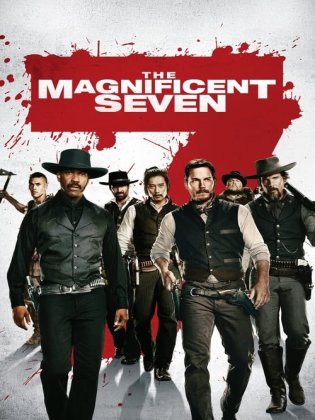
THE MAGNIFICENT SEVEN (1960)
Summary:
In the arid landscapes of a remote Mexican village, the impoverished farmers live under the constant oppression of Calvera and his band of forty ruthless outlaws. Each year, after a meager harvest, Calvera descends upon the village, plundering their food and resources, leaving them on the brink of starvation. Desperate and seeing no other recourse, the village elders decide to seek professional help across the border in America, hoping to acquire weapons or, failing that, skilled fighters.
Their quest leads them to Chris Adams, a seasoned and morally complex gunfighter. Chris, recognizing the futility of untrained villagers wielding guns, instead advises them to hire gunfighters. He assembles a diverse and formidable team of six other skilled but disparate gunmen: Vin Tanner, Bernardo O'Reilly, Lee, Harry Luck, Britt, and the young, ambitious Chico. These seven men, each with their own reasons for taking on the impossible task, journey to the village, where they embark on a challenging mission to train the fearful farmers and defend them against Calvera's overwhelming force, ultimately facing a profound choice between their mercenary instincts and a burgeoning sense of responsibility for the villagers' fate.
Keywords: The Magnificent Seven, 1960, Yul Brynner, Steve McQueen, Western, Action, Adventure, John Sturges.
Plot:
The story opens with a stark depiction of life in a small, impoverished Mexican village, nestled amidst rugged terrain. Annually, after their meager harvest, the village is terrorized by Calvera, a notorious bandit leader, and his forty-ong men. Calvera and his gang ride in, confiscating all the villagers' food, leaving them with barely enough to survive. During one such raid, a villager attempts to fight back and is brutally killed, sending a clear message of the bandits' absolute power and the villagers' utter helplessness. Driven to desperation, the village elder, a man of quiet wisdom, proposes a radical solution: they must seek help. Three villagers are chosen to cross the border into America, tasked with buying guns to defend themselves.
Their journey leads them to a dusty border town, where they witness an impressive act of courage and skill by Chris Adams, a veteran gunfighter. Chris, along with Vin Tanner, another skilled gunman, deftly handles the burial of a Native American man in the town cemetery, overcoming the prejudice of the local undertaker. The villagers approach Chris, explaining their plight and their desire for weapons. Chris, however, understands that untrained farmers with guns are no match for professional bandits. He advises them that what they truly need are gunfighters – men who know how to use guns. Though initially hesitant due to the paltry sum the villagers can offer, Chris is moved by their desperation and the moral challenge of the task. He agrees to help and begins to recruit a team.
Chris's recruitment drive introduces the audience to the diverse personalities that will form the Magnificent Seven. First is Vin Tanner, a pragmatic and quick-witted drifter with a sharp eye and an even sharper tongue, who Chris knows from previous encounters. Next is Bernardo O'Reilly, a half-Irish, half-Mexican mercenary who initially scoffs at the low pay but is swayed by the challenge and Chris's quiet conviction. Lee, a once-famous gunfighter now haunted by past glories and succumbing to fear, is found hiding in a rundown hotel, his reputation preceding him despite his current state. Harry Luck, a greedy and cynical man, believes Chris has a secret, more lucrative motive for the job. Britt, a silent and incredibly skilled knife-thrower and marksman, joins after a stunning display of his prowess in a duel. Finally, Chico, a hot-headed, ambitious young Mexican, initially tries to prove himself worthy by challenging Chris, but eventually earns his place through sheer determination and a desire for glory.
The seven gunfighters, an unlikely band of heroes, ride into the village. Their arrival is met with a mix of awe and apprehension from the villagers. Chris immediately takes charge, assessing the village's defenses and the villagers' capabilities. He realizes that the first step is to teach the farmers how to fight, not just with guns, but with their courage. The gunfighters begin a rigorous training regimen, teaching the villagers how to shoot, how to build barricades, and how to work as a team. This period is fraught with tension; some villagers are resistant, fearing retaliation from Calvera, while others, particularly the younger generation and women like Petra, begin to find a new sense of hope and self-respect. Chico, being Mexican, bridges the gap between the gunfighters and the villagers, often translating and explaining the gunfighters' intentions. Bernardo, in particular, forms a bond with the village children, who are initially wary of him but soon see his protective nature.
The first confrontation with Calvera's gang is a testament to the gunfighters' training and the villagers' newfound resolve. Calvera, returning for his usual plunder, is utterly surprised by the organized resistance. The gunfighters, strategically positioned, drive off the bandits with minimal casualties. This victory, though small, instills a powerful sense of pride and confidence in the villagers. They celebrate, believing their troubles are over. However, the gunfighters, seasoned in warfare, know better. They understand that Calvera will return, and he will be far more dangerous after this humiliation. Tensions begin to rise among the seven themselves. Harry continues to search for the "gold" he believes Chris is hiding. Lee struggles with his inner demons, his fear of failure becoming more pronounced. Chico, idealistic and youthful, is frustrated by the gunfighters' cynicism and the villagers' lingering timidity.
The expected counter-attack comes, but not as anticipated. Calvera, a cunning tactician, infiltrates the village at night, catching the gunfighters off guard. They are disarmed and captured. Calvera, rather than killing them, delivers a chilling monologue about their foolishness in defending "their" people, then sets them free, believing he has taught them a lesson. He intends for them to spread the word that no one can stand against him. The seven are left outside the village, humiliated and defeated. Most are ready to leave, their mercenary contract fulfilled. Harry, in particular, is eager to abandon the lost cause. However, Chris and Vin, driven by a deeper sense of responsibility that has grown during their time in the village, decide they cannot simply abandon the villagers to Calvera's wrath. One by one, the others are swayed. Bernardo feels a connection to the children. Britt and Lee are driven by a sense of professional honor. Chico, deeply invested in his own people, is resolute. Even Harry, despite his greed, eventually returns, perhaps realizing the true value of their fight.
The magnificent seven return to the village, staging a daring surprise attack against Calvera's now entrenched forces. What ensues is a brutal and chaotic gunfight throughout the village. Each gunfighter displays his unique skills and confronts his personal demons. Bernardo O'Reilly, in a poignant moment of sacrifice, shields the village children from a bandit's bullets, dying heroically. Lee, battling his profound fear, finally finds his courage, engaging in a desperate close-quarters fight before being fatally shot. His death is a tragic redemption. Harry Luck, after initially being shot and revealing his belief that Chris had found gold, has his final moments of redemption when he uses his last breath to warn Chris of an approaching bandit, saving his life. Britt, with his unparalleled marksmanship and knife skills, takes down numerous bandits before falling in the heat of battle. The battle rages, with both sides suffering heavy losses. The villagers, inspired by the gunfighters' courage, also join the fight, throwing rocks and makeshift weapons, showing they are no longer the helpless victims they once were.
The climax sees Chris and Vin cornering Calvera. In a tense standoff, Chris fatally shoots Calvera, ending his reign of terror. The remaining bandits, leaderless and demoralized, flee. The battle is won, but at a heavy cost. Four of the magnificent seven lie dead: Bernardo, Lee, Britt, and Harry. Chris, Vin, and Chico are the only survivors. The villagers emerge from hiding, their faces a mixture of grief and profound gratitude. Chico, having found love with Petra, one of the village women, decides to stay, embracing his heritage and the new life he has found. Chris and Vin, the two remaining professionals, reflect on their "victory." Chris remarks that they "lost," implying that they are still outsiders, forever destined to wander, while the villagers have truly won by reclaiming their lives and their land. The elder delivers a poignant eulogy, stating that while the gunfighters have gone, they have left behind something more valuable than any harvest: "They left us their lives. They gave us ourselves." The film concludes with Chris and Vin riding away, leaving the now-free village behind, their faces etched with the somber understanding of their solitary, wandering existence, yet knowing they made a difference.
Cast (Lead Roles):
- Yul Brynner as Chris Adams
- Steve McQueen as Vin Tanner
- Charles Bronson as Bernardo O'Reilly
- James Coburn as Britt
- Robert Vaughn as Lee
- Brad Dexter as Harry Luck
- Horst Buchholz as Chico
Crew:
- Director: John Sturges
- Screenplay: William Roberts
- Story: Akira Kurosawa, Shinobu Hashimoto, Hideo Oguni (based on their film "Seven Samurai")
- Producers: John Sturges, Walter Mirisch
- Music: Elmer Bernstein
- Cinematography: Charles Lang Jr.
- Film Editing: Ferris Webster
Release Info:
- Original Release Date: October 23, 1960
- Language: English, Spanish
- Genre: Western, Action, Adventure
- Running Time: 128 minutes
- Accolades: Academy Award Nomination for Best Original Score (Elmer Bernstein). Selected for preservation in the United States National Film Registry by the Library of Congress as being "culturally, historically, or aesthetically significant" in 2013.