


Discription
The year is 1961. The Congo, a nation newly independent from Belgian colonial rule, is engulfed in chaos. The assassination of Prime Minister Patrice Lumumba throws the country into a spiral of violence and political instability. The mineral-rich province of Katanga, under the leadership of the ambitious Moise Tshombe, declares independence, plunging the nation deeper into conflict.
Against this backdrop of turmoil, UN Secretary-General Dag Hammarskjöld appoints Irish diplomat Conor Cruise O'Brien to lead a peacekeeping mission. Hammarskjöld, recognizing the precarious global situation, privately instructs O'Brien to take a more proactive approach, to intervene decisively to prevent the situation from escalating into a wider conflict. He warns O'Brien that the Katanga crisis could potentially ignite World War III.
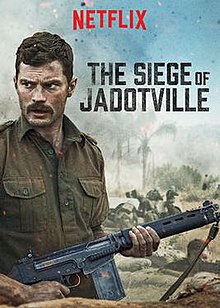
Meanwhile, in Ireland, Commandant Pat Quinlan leads an infantry company of Irish peacekeepers, a group of young, idealistic soldiers, many of whom have never seen combat. They arrive at the UN compound near the Katanga town of Jadotville, a seemingly innocuous outpost in the heart of enemy territory.
Quinlan, a seasoned veteran, immediately recognizes the vulnerability of their position. The compound, inadequately defended, sits dangerously exposed. He orders his men to dig trenches, fortify their positions, and prepare for the inevitable attack.
During a brief respite, Quinlan encounters Rene Faulques, a charismatic but ruthless French mercenary hired by the Katangese mining companies. Faulques, a veteran of colonial wars, exudes an air of menace, a stark contrast to the idealistic Irish soldiers.
Later, Quinlan visits the estate of Madam LaFongagne, a wealthy Belgian colonist. During their conversation, Madam LaFongagne reveals a crucial piece of information: Jadotville sits atop vast uranium deposits, a resource coveted by both internal and external forces. This revelation further underscores the strategic importance of the UN position and the escalating dangers they face.
O'Brien, in a desperate attempt to prevent the situation from spiraling out of control, orders UN forces to launch an offensive against Katangese positions in Elizabethville. However, the operation goes disastrously wrong. Indian peacekeepers, attempting to seize a radio station, inadvertently kill 30 unarmed Katangese civilians. O'Brien, fearing international condemnation, orders the incident to be covered up, a decision that will have far-reaching consequences.
In retaliation for the deaths of their civilians, the Katangese, backed by Faulques's mercenaries, launch a full-scale assault on Jadotville. The Irish, outnumbered and outgunned, fight with fierce determination. They inflict heavy casualties on the enemy, killing over 300 and wounding 1,000, while suffering only 16 wounded themselves.
Reinforcements are dispatched, but they are repelled by the fierce resistance of the Katangese. An attempt to supply the besieged soldiers with water and evacuate the wounded by helicopter fails tragically as the helicopter is shot down.
After days of relentless attacks, with their ammunition dwindling and their water supply depleted, the Irish company is forced to surrender. They are taken prisoner by the Katangese, enduring weeks of captivity.
Upon their return to Ireland, Commandant Quinlan faces a chilling reality. The truth about the siege of Jadotville is suppressed by the UN and the Irish government. The official narrative paints a picture of a peaceful surrender, a necessary concession in the face of overwhelming odds. The heroism of the Irish soldiers, their extraordinary courage and resilience, is buried under a veil of silence.
Quinlan and his men are left to grapple with the betrayal, the shame of a hidden history, and the knowledge that their bravery had been sacrificed for political expediency. It would take decades for the truth to finally emerge, for the bravery of "A" Company to be recognized and their sacrifice to be acknowledged.
The siege of Jadotville stands as a poignant reminder of the complexities of peacekeeping operations, the often-unseen sacrifices made by soldiers, and the enduring struggle for justice and truth in the face of political expediency.