


Discription
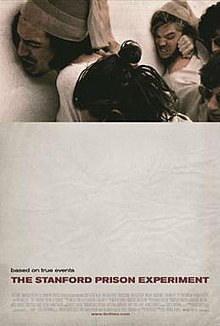
The Stanford Prison Experiment (2015):
Summary:
Based on the infamous 1971 psychological experiment, the film chronicles a group of college students who volunteer to participate in a study examining the effects of power.1 Randomly assigned roles as "guards" and "prisoners" within a simulated prison environment, the participants quickly descend into their roles, leading to disturbing displays of dominance, dehumanization, and psychological distress, forcing the premature termination of the experiment.2
Plot:
The film opens with the recruitment phase of Dr. Philip Zimbardo's psychology experiment at Stanford University in August 1971. Young, male college student volunteers are interviewed and psychologically evaluated to ensure their stability before being selected to participate in a two-week study on the psychological effects of imprisonment.3 The participants are promised a modest daily stipend.
The chosen volunteers are randomly assigned to the roles of either "guard" or "prisoner."4 The "prisoners" are unexpectedly "arrested" at their homes by real police officers, booked, and then transported to the makeshift prison set up in the basement of the Stanford psychology department.5 They are stripped, deloused, given identical smocks with numbers instead of names, and confined to cells.6
The "guards" are given uniforms, sunglasses (to avoid eye contact and foster anonymity), and batons, but are explicitly instructed not to physically harm the prisoners.7 They are told to maintain order and enforce the rules established by the researchers.
Initially, both groups are somewhat uncertain and awkward in their roles. However, the guards quickly begin to assert their authority. Starting with seemingly minor acts of control, they soon escalate their tactics, employing psychological manipulation, humiliation, and sleep deprivation to break the prisoners' spirits and maintain dominance.
The prisoners, initially resistant, begin to internalize their roles, becoming increasingly passive, distressed, and even exhibiting signs of psychological breakdown.8 They attempt a rebellion early on, which is swiftly and harshly suppressed by the guards, leading to a further increase in the guards' aggressive behavior.9
As the days progress, the line between role-playing and reality blurs. The guards become more sadistic and inventive in their punishments, devising increasingly cruel and dehumanizing ways to control the prisoners.10 The prisoners, in turn, become more despondent, anxious, and emotionally fragile. Some experience significant psychological distress, including panic attacks and emotional outbursts.11
Dr. Zimbardo, the lead researcher, initially observes the experiment with a scientific detachment. However, as the situation deteriorates, he becomes increasingly immersed in his role as the "prison superintendent," losing some of his objectivity.12 His focus shifts from observing to managing the simulated prison environment.13
Various events within the prison escalate the tension. One prisoner, Billy Porter (Prisoner #8612), experiences a severe emotional breakdown and is eventually released. Other prisoners also exhibit signs of extreme psychological distress.14
Outside observers, including Christina Maslach, a fellow psychology graduate student who would later become Zimbardo's wife, visit the experiment and express deep concern over the ethical implications and the disturbing behavior of the guards.15 Maslach's strong reaction and moral objections force Zimbardo to confront the reality of what the experiment has become.
Faced with mounting evidence of the severe psychological harm inflicted on the participants and the loss of control over the simulated environment, Dr. Zimbardo, under pressure from Maslach and the ethical concerns raised, decides to terminate the experiment after only six days, far short of the planned two weeks.16
The film concludes with the participants reflecting on their experiences and the profound impact the experiment had on them, highlighting the power of situational forces on human behavior and raising serious ethical questions about psychological research.
Cast:
- Billy Crudup as Dr. Philip Zimbardo17
- Ezra Miller as Daniel Parker / Prisoner #8612
- Tye Sheridan as Peter Mitchell / Prisoner #81918
- Johnny Simmons as Jeff Janssen / Prisoner #5704
- Olivia Thirlby as Christina Maslach19
- Michael Angarano as Christopher Archer / Guard #320
- Gaius Charles as Paul / Guard #121
- Ki Hong Lee as Gavin Chan / Prisoner #41622
- Britt Robertson as Emily Harris
- James Frecheville as Lucas
- Miles Heizer as Marshall23
- Thomas Mann as Prisoner #416 (initially)24
- Chris Sheffield as Kyle
- Kyle Gallner as Prisoner #5486
- Jesse Carere as Albert
- Randall Batinkoff as Dr. White
Crew:
- Director: Kyle Patrick Alvarez25
- Screenplay by: Tim Talbott26
- Producers: Brent Emery, Lauren Bratman, Brian Geraghty
- Executive Producers: Jim Seibel, Bill Johnson, Ara Keshishyan, Nate Parker, Mark Amin, Tyler Boehm
- Cinematography: Jas Shelton27
- Film Editing: Jennifer Lilly
- Music by: Andrew Hewitt28
- Production Design: Marcia Hinds
- Casting by: Joseph Middleton, Nicole Hilliard-Forde