

Discription
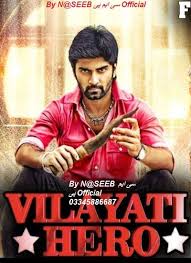
Chandi Veeran (2015)
Chandi Veeran is a 2015 Indian Tamil-language romantic action film directed by A. Sarkunam and produced by director Bala. The film stars Atharvaa and Anandhi in the lead roles, with Lal, Rajashree, and Bose Venkat playing supporting roles. The film's music is composed by S. N. Arunagiri, with the score by Sabesh-Murali.
The film addresses themes of village conflict, water scarcity, and romance. It tells the story of a young man who tries to stop a long-standing feud between two villages.
Movie Summary
The film revolves around Paari, who returns from Singapore to his village, where a water dispute between his village and a neighboring village continues. Paari's father had died trying to stop this conflict. Paari falls in love with Thamarai, the daughter of the wealthy village head who owns the pond causing the water scarcity. Paari faces the challenge of winning her over and resolving the water issue between the villages.
Detailed Plot
Chandi Veeran opens with a depiction of a long-standing and bitter feud between two villages in rural Tamil Nadu. The core of the conflict is a dispute over water rights, specifically access to a pond that is controlled by the wealthier village. This scarcity of water has led to animosity, violence, and a deep-seated hatred between the two communities.
The film then introduces us to Paari (Atharvaa), a young man who is returning to his native village after spending several years working in Singapore. Paari's return is not a joyous homecoming; it's laden with the weight of the past. We learn that his father was tragically killed while attempting to negotiate a peaceful resolution to the water dispute. This event has left a lasting scar on Paari and his village, and his return is seen by some as a potential catalyst for renewed conflict.
Paari is a complex character. Having been away from the village, he has a slightly more modern and progressive outlook than some of the other residents. He's also carrying the burden of his father's legacy, the expectation that he might somehow resolve this seemingly intractable problem. He's determined, but also cautious, aware of the deep-seated nature of the feud.
Upon his return, Paari encounters Thamarai (Anandhi), a vibrant and spirited young woman. Thamarai is, crucially, the daughter of the wealthy village headman (Lal) who controls the vital pond. This immediately establishes a significant obstacle to any potential relationship between them. Thamarai is not a stereotypical village girl; she's educated, independent-minded, and not easily intimidated. However, she's also deeply loyal to her family and her village, making her torn between her personal feelings and her sense of duty.
The film then develops the romantic track between Paari and Thamarai. Paari is immediately drawn to Thamarai's strength and intelligence, and she, in turn, is intrigued by his worldliness and his somewhat different perspective. Their initial interactions are a mix of attraction and conflict, as they navigate the complex social dynamics of their villages and the shadow of the ongoing feud.
A key element in their relationship is the opposition of Thamarai's father. He is a powerful and influential figure, accustomed to getting his way. He sees Paari as a threat, not only to his daughter but also to the established order of the village and his control over the water resources. He is a major antagonist in the film, representing the entrenched traditionalism and resistance to change that perpetuate the conflict.
As Paari tries to win Thamarai's heart, he also becomes increasingly aware of the suffering of his own village due to the water scarcity. He witnesses firsthand the hardships they endure, the struggles to grow crops, and the daily indignities they face in having to rely on the whims of the neighboring village. This fuels his determination to find a solution to the water problem, not just for his personal happiness but for the well-being of his community.
The film portrays Paari's efforts to bridge the divide between the two villages. He attempts to engage in dialogue, to reason with the elders, and to find a compromise that would ensure a fair distribution of water. These efforts are met with resistance, suspicion, and even violence. The film highlights the difficulties of overcoming generations of mistrust and animosity.
There are subplots and supporting characters that enrich the narrative. We see the plight of the villagers, their desperation, and their longing for a resolution. We also see the internal conflicts within both villages, the voices of reason, and the forces of intransigence. These elements add depth and complexity to the portrayal of the conflict.
The climax of the film usually involves a direct confrontation, not just between Paari and Thamarai's father, but also between the two villages. This confrontation might take the form of a tense negotiation, a physical altercation, or a combination of both. Paari's actions in this climax are crucial; he must find a way to be both courageous and wise, to stand up for what he believes in without resorting to the same violence that has plagued his community for so long.
The resolution of Chandi Veeran typically involves Paari finding a way to resolve the water dispute. This resolution is not always straightforward; it might involve a clever strategy, a sacrifice, or a change of heart on the part of one or more key characters. The film aims to show that even deeply ingrained conflicts can be resolved through dialogue, understanding, and a willingness to break the cycle of violence.
The ending of the film usually depicts Paari and Thamarai united, their love story intertwined with the resolution of the village conflict. The film concludes on a note of hope, suggesting that it is possible to overcome even the most deeply rooted divisions and build a more harmonious future.
Cast
-
Atharvaa as Paari
-
Anandhi as Thamarai
-
Lal as Thamarai's father
-
Rajashree
-
Bose Venkat as Paari's father
Crew
-
Director: A. Sarkunam
-
Producer: Bala
-
Music Director: S. N. Arunagiri
-
Background Score: Sabesh-Murali
-
Cinematography: P. G. Muthiah
-
Editor: Raja Mohammad
-
Art Director: G. Ramadoss
-
Stunt Director: Rajasekhar